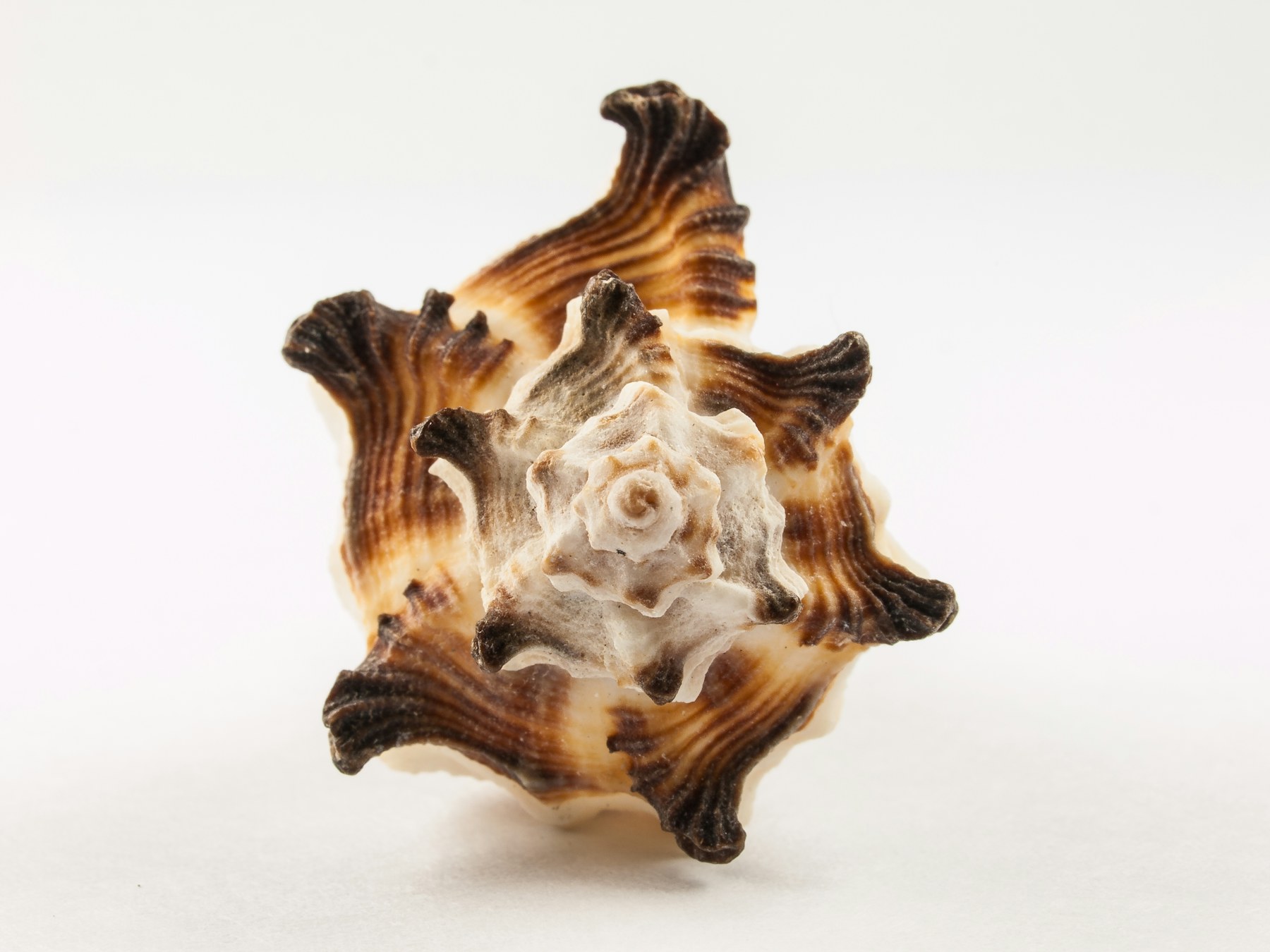
The first and most famous purple dye known in history, “Tyrian purple” or “Phoenician purple,” was discovered in the ancient Phoenician city of Tyre, located within the borders of modern-day Lebanon.
Discovered by the Phoenicians around the 15th century BC, this color was obtained from the secretions of spiny sea snails of the Murex genus living along the Mediterranean coast. Because its production was extremely laborious (tens of thousands of snails were needed to obtain a small amount of dye), this dye was even more valuable than gold.
Due to its extraordinary expense and difficult production, purple became a symbol of wealth, power, and nobility for centuries; in Rome, Byzantium, and many other empires, it was reserved exclusively for the royal family and top officials.
If you are asking about the discovery of synthetic (chemical) purple dye; the first synthetic purple dye, “Mauveine,” was accidentally discovered in a laboratory in England in 1856 by an 18-year-old chemist, William Henry Perkin, while he was trying to find a cure for malaria. This discovery is considered the beginning of modern chemistry and the dye industry.
The Importance of Phoenicia
The coastline that hosted the ancient “Phoenicia” civilization is largely within the borders of Lebanon today. The city of Tyre, where the purple dye was found, is also a historical coastal city located in southern Lebanon today.
Lebanon is a small country in the Middle East, located on the eastern coast of the Mediterranean, with a very rich historical and cultural fabric. It is bordered by Syria to the north and east, and Israel to the south. Its capital is Beirut. The general characteristics of the country are as follows:
- Cultural and Religious Diversity: It is one of the most demographically diverse countries in the Middle East. Its population consists of Muslims (Sunni and Shia), Christians (Maronite, Greek Orthodox, Armenian Catholic, etc.), and Druze. Its political system is also based on a special system (confessionalism) where power is distributed among these religious groups.
- History and Society: In the mid-20th century, thanks to its strong economy, banking sector, and tourism, it was known as “the Switzerland of the Middle East,” and its capital Beirut was called “the Paris of the Middle East” for its vibrant life and architecture. However, the devastating civil war between 1975-1990 and the deepening economic and political crises in recent years have distanced the country from these former glorious days.
- Geography and Climate: It is a typical Mediterranean country. Unlike the general Middle East, it does not contain vast deserts. It has a mountainous geography; it has a climate diversity where one can swim in the Mediterranean and ski in its high mountains on the same day. The national symbol of the country, also featured on its flag, is the famous Lebanese cedar, which the Phoenicians used in shipbuilding in ancient times.
- Cuisine: It has a very rich and world-renowned cuisine, blending Mediterranean and Arab cuisines. Hummus, tabbouleh, falafel, and various olive oil mezes are the cornerstones of this cuisine.
The Discovery of Purple
It is not precisely known how, when, or by whom the purple color (Tyrian purple) was discovered on the Phoenician coasts. Due to the lack of historical records, this subject has been the subject of both scientific estimations and mythological legends.
Phoenicians were a seafaring people and were not specifically looking for a dye at that time. Historians and archaeologists agree that this discovery was entirely accidental. The two prominent views on the subject are:
1. Historical and Scientific Views (Accidental Discovery)
- Food search: It is thought that coastal people collected Murex spiny sea snails as food. When breaking their shells to extract the meat, the fluid from their glands must have gotten onto hands or baskets. This fluid is initially colorless or yellowish but undergoes a chemical reaction when exposed to sunlight (UV) and air (oxygen), turning sequentially green, blue, and finally a permanent purple.
- Fishing activities: Another view is that these snails got caught in fishing nets or traps. Snails release this fluid as a defense mechanism when in danger. Fishermen pulling nets out of the water might have noticed the net ropes drying in the sun taking on a vibrant purple color.
2. Mythological View (The Legend of Melkart’s Dog)
According to a famous legend recounted in ancient Greek and Roman texts, the discovery unfolded as follows: The Phoenician god Melkart (Heracles/Hercules in Greek mythology) was walking on the beach of Tyre with his beloved nymph Tyros and his dog. The dog bit a sea snail on the beach, and its mouth was stained with a bright purple liquid. Tyros was fascinated by this unique color and asked Melkart to make her clothes only in this color. According to the legend, the purple dye industry in the city of Tyre began this way.
The invention of purple was not a conscious “color search” conducted in a laboratory or in nature; it was an accident experienced by the Phoenician people, who were engaged in fishing or gathering, when they noticed the snail secretions changing color under the sun. The Phoenicians eventually transformed this accidentally noticed color change into a systematic and extremely laborious industrial setup.
Mass Production Process
According to primary sources from antiquity (especially the work Naturalis Historia by the Roman writer Pliny the Elder) and archaeological excavations, the mass production process basically consisted of the following stages:
- Collection and Selection: Bolinus brandaris and Hexaplex trunculus species of sea snails were collected in large quantities with basket-shaped traps. The shells of larger snails were broken, and the dye-secreting gland was extracted by hand, while smaller snails were crushed with their shells.
- Salting: This extracted organic material was soaked in concentrated salt for about three days to slow down spoilage and allow the secretion to flow.
- Heat Treatment (Boiling): The mixture was placed in lead or tin vessels and slowly boiled at a low temperature for about 10 days. During boiling, meat and shell fragments rising to the surface were continuously strained to purify the liquid.
- Oxidation: Wool fabrics were dipped into this initially colorless or yellowish hot liquid and left to dry in the open air. When the liquid came into contact with sunlight (UV) and oxygen in the air, it underwent a chemical reaction, acquiring its famous permanent purple color.
The two most prominent features of the production process were:
- Extreme Inefficiency: Approximately 10,000 to 12,000 snails were required to obtain 1 gram of dye. This explains why the color was more expensive than gold.
- Unbearable Odor: The sulfur-based odor emitted by decaying and boiling sea creatures was very intense. Therefore, dye workshops had to be established outside settlements, downwind. (An ancient Jewish law granted a woman the right to divorce if her husband later became a dye producer due to the odor.)
There are some disagreements in the scientific community regarding the ancient production process. Although Pliny’s account is accepted as fundamental, modern chemists and archaeologists argue that there was not a single method for the “reduction” phase that allowed the dye to adhere to the fabric. There is no definitive consensus on whether the Phoenicians used anaerobic fermentation (anaerobic digestion) to fix the dye to the fabric, or whether they added alkaline substances such as stale urine, wood ash, or seawater to the mixture. It is thought that multiple chemical methods might have been used simultaneously in different periods or different workshops.
Related reading
 HistoryWhy Are Cows Sacred in India?
 HistoryBeer Before Bread Theory
 Culture & ArtThe Oldest Toy; Yoyo
 Culture & ArtThe Cultural History of Knots: Threads of Meaning, from Practicality to Symbolism
 Culture & ArtThe History and Cultural Meanings of Hair Braiding
 Culture & ArtThe Historical Evolution of Marriage and Wedding Dresses
 ScienceThe creation of the world’s first webcam to monitor coffee
 HistoryWashing Clothes with Urine in Ancient Rome
Read more · History
 Why did the war between Iran and Israel start?
 The French’s Fear of Potatoes at One Time
 AD 17 Lydia Earthquake
 The Timeless Legacy of Tattoos: Stories Etched on Skin
 Tasmania (Island of Australia) and the Story of “Extinction”
 was the aunty jack show’s color broadcast an accident?
 The Periods of Che Guevara’s Memoirs
 The Global History of Cannabis Prohibition
 Marco Polo: Venetian Explorer and Traveler
 Divorce by Combat in the Middle Ages
 Accidental Felling of the World’s Oldest Tree
 Steve Jobs’s Drug Use in His Youth
Leave a Reply