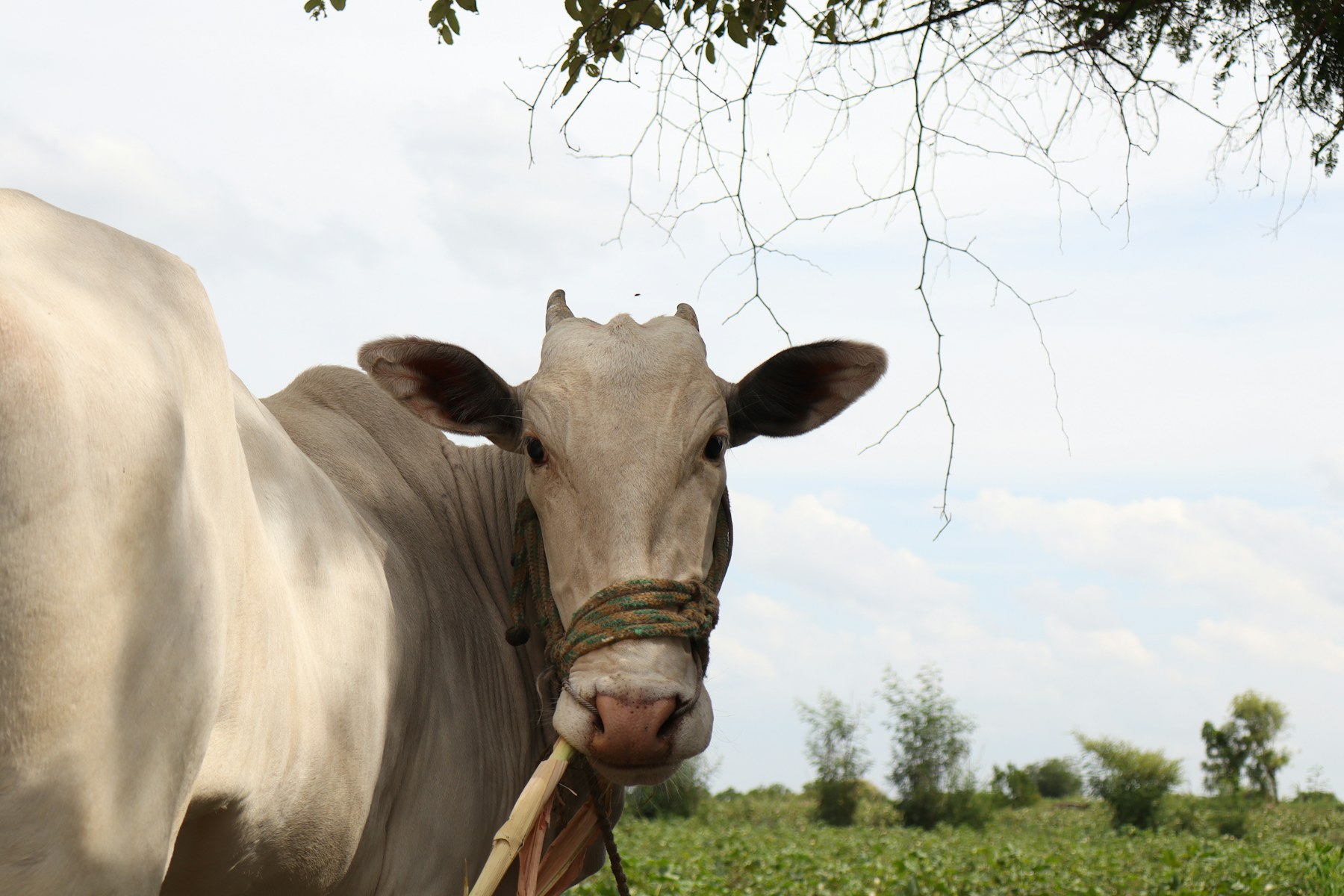
The sacred status of cows in India is not a dogmatic rule that emerged at a single moment, but rather the result of economic, ecological, and religious changes spanning thousands of years. There are academic approaches among historians and anthropologists that differ from the traditional theological narrative regarding how this status was gained.
The topic is primarily examined from different perspectives, including historical, mythological, and ecological/economic.
Historical and Religious Process
Vedic Period (1500 – 500 BCE): In early Hindu texts (Vedas), the cow was seen as a measure of wealth and an important element in rituals (especially in the form of ghee – clarified butter). According to historical text analyses by academics like Indian historian D.N. Jha, cows were sacrificed and their meat consumed in the early Vedic period. In the social structure of the time, the cow did not possess absolute inviolability.
Rise of the Ahimsa (Non-violence) Principle: With the rise of Buddhism and Jainism in the mid-1st millennium BCE, the philosophy of “ahimsa” (non-harm to any living being) became widespread. Hinduism, facing societal competition from these new belief systems, began to question and reduce animal sacrifice rituals. Over time, Brahmins (the priestly class) adopted vegetarianism, and the cow became a symbol of non-violence.
Mythological Integration: In Hindu mythology, the cow was associated with Kamadhenu (the wish-granting cow), prominent for its qualities of fertility and motherhood. Furthermore, the depiction of Krishna, one of the most important avatars of God Vishnu, as a cowherd (Gopala), permanently solidified the cow’s religious status among the populace.
Economic and Ecological Perspective (Cultural Ecology)
Anthropologist Marvin Harris’s cultural ecology study, published in Current Anthropology and widely accepted in anthropology, explains the sacralization of cows through economic necessities and a survival strategy:
- Agricultural Labor: In India’s monsoon-dependent agricultural system, oxen were needed to plow hard soils. Consuming cows as food meant destroying future agricultural labor (oxen) that would plow the fields.
- Sustainability: The cow provided a continuous protein source with its milk, fuel with its dung, and floor insulation material. While slaughtering a cow for food during droughts or famines would provide short-term calories, in the long run, it would result in the family being unable to plow their fields and starving. According to Harris, making cow slaughter a religious taboo was a necessary cultural adaptation that protected society from this ecological and economic disaster.
Strategic Maneuver
The word “strategy” should not be understood in the modern sense as a secret decision made by a group of religious leaders or administrators sitting around a table. According to historians and anthropologists, this evolved over centuries as a “survival and competition strategy” progressing along two different paths.
Academic literature examines this strategic evolution under two main headings:
- Religious and Sociological Competition Strategy (Conscious Adaptation): In the 1st millennium BCE, Hinduism faced a serious crisis. New faiths like Buddhism and Jainism were rapidly spreading among the populace by rejecting bloody sacrifice rituals and advocating non-violence (ahimsa). Hindu priests (Brahmins) faced the danger of losing their power and followers. According to historians, Brahmins revised their rules to counteract the appeal of these new faiths. They stopped animal sacrifices, adopted vegetarianism, and placed the cow, already highly valued by the agricultural society, at the center of their new “non-violence” philosophy. In other words, they adopted their rivals’ strongest argument and integrated it into their own belief system, implementing an ideological defense strategy.
- Ecological Survival Strategy (Cultural Adaptation): According to the cultural materialism approach, nature and climatic conditions forced society to establish certain rules. In India, during periods of drought and famine, when hungry people consumed cattle, their only power to plow the fields, it meant fields could not be plowed the following year, leading to mass deaths. Given the fact that people cannot think rationally in moments of extreme hunger, the only sure way to prevent cattle slaughter was to make it a “religious taboo.” According to anthropologists, this was an unconscious ecological strategy developed by society to avoid long-term extinction. Over centuries, this economic necessity was passed down from generation to generation, becoming an unquestionable belief.
The sacralization of the cow is the established result of an ecological survival mechanism developed by agricultural society against nature and a sociological market share protection maneuver implemented by Hinduism against other religions, which permeated religious texts. The reason other societies did not sacralize cattle or grant them the same inviolability lies in geography, climate, alternative animal power, and different religious dynamics. According to comparative analyses by anthropologists and ecologists, the main factors creating this difference are:
- Climate and Agricultural Calendar Difference (Monsoon Factor): Indian agriculture is dependent on intense monsoon rains falling during a very short period of the year. The hard soil needs to be plowed quickly within this short window, which simultaneously creates a need for massive animal power (oxen). In Europe and the Middle East, rainfall is more evenly distributed throughout the year; plowing can be spread over months, so the work can be done with a limited number of animals. Therefore, in India, eating an animal during a crisis meant missing that short rain window and facing complete annihilation.
- Availability of Alternative Animals: Europe developed the “horse collar,” which allowed for much more efficient use of horses in agriculture. The Middle East used camels and donkeys, while China used water buffalo more suited for wet rice cultivation. In India’s hot and arid climate, “Zebu” cattle (humped cows), resistant to tropical diseases, were almost the sole and irreplaceable engine of agriculture.
- Land and Pasture Capacity: Europe, Central Asia, and the Americas had vast grasslands and pastures. Cattle could be raised solely for their meat in these pastures without competing with human agricultural areas. In densely populated India, however, every arable inch of land was dedicated to grain production for humans. Cows, surviving solely on agricultural waste or scraps, became an ecological recycling machine that produced fertilizer, fuel, and energy (milk/labor) without entering into food competition with humans.
- Religious and Philosophical Background: Great civilizations outside India developed different belief systems. The Abrahamic religions centered in the Middle East (Judaism, Christianity, Islam) adopted the idea that humans are at the center of nature and animals were created for human benefit. In China and East Asia, more pragmatic systems like Confucianism prevailed; pigs were prominent as a meat source, and while cattle slaughter was occasionally banned (especially during the Han and Song dynasties to protect agriculture), this did not evolve into religious sanctity.
Compared to India, other societies did not “care less” about this issue; rather, they did not need such a prohibition because their climates, vast pastures, or alternative animals afforded them the ecological luxury to tolerate eating cattle.
Related reading
 HistoryBeer Before Bread Theory
 Culture & ArtThe Crossed Fingers Secret: Why Do We Cross Our Fingers for Luck?
 Culture & ArtThe History and Cultural Meanings of Hair Braiding
 Culture & ArtThe Historical Evolution of Marriage and Wedding Dresses
 HistoryThe World’s First Church
 HistoryRescue of Jews Exiled from Spain by the Ottoman Empire
 Culture & ArtThe Oldest Toy; Yoyo
 HistoryWashing Clothes with Urine in Ancient Rome
Read more · History
 was the aunty jack show’s color broadcast an accident?
 The Concept of Suburb
 Eugenics: From America to Nazi Germany
 Divorce by Combat in the Middle Ages
 The Radio Broadcaster Who Tried to Demoralize American Soldiers During the Vietnam War and Other War Stratagems
 Marco Polo: Venetian Explorer and Traveler
 The Global History of Cannabis Prohibition
 History of Isparta Rose Cultivation
 Argentina Sending Pregnant Citizen to Antarctica
 The Battle of Los Angeles in 1940
 When was Denmark last threatened?
 Is Monaco a Country?
Leave a Reply