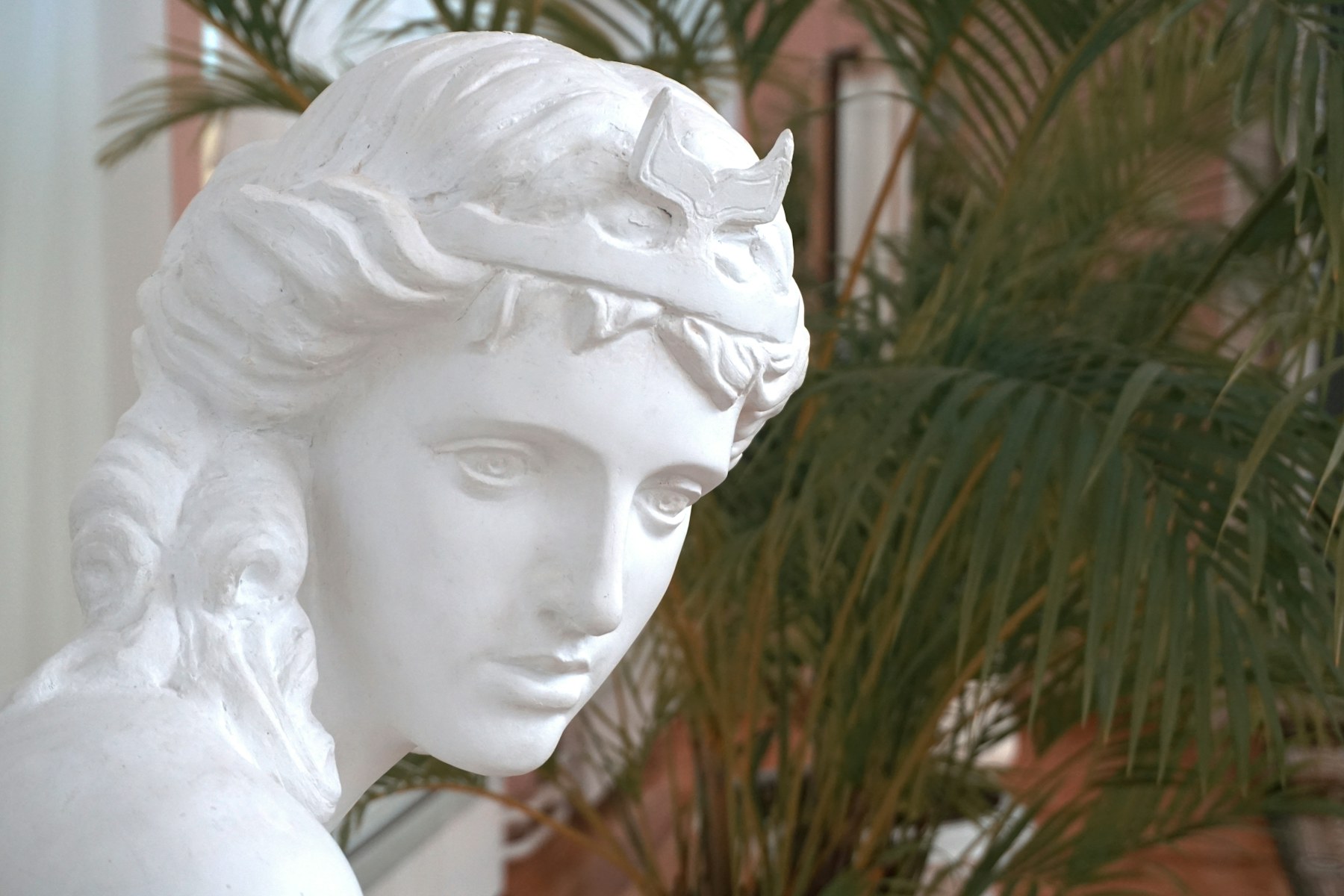
Although the origin of braiding does not belong to a single society or geography, the oldest known examples take us back approximately 30,000 years to the Paleolithic period.
Here are the prominent stops in the historical journey of hair braiding:
The Historical Journey of Hair Braiding
Early Traces: Venus Figurines
The oldest physical evidence of hair braiding is seen in figurines such as the “Venus of Willendorf” and the “Venus of Brassenpouy,” dated to 28,000 – 25,000 BC. The detailed patterns on the heads of these figures are accepted as representing braided hair.
Ancient Africa: Symbol of Identity
Braiding culture has deep roots, especially on the African continent.
Around 3500 BC in sub-Saharan Africa (especially in communities like the Himba people in Namibia), braiding became a “communication language” indicating a person’s social status, age, marital status, religion, and even their tribal affiliation.
In ancient Egypt, braids were used for both aesthetic and practical purposes (protection from lice and coolness), and complex braiding patterns were even included in pharaohs’ wigs.
Braiding in Other Civilizations
- Ancient Greece and Rome: Braiding was a symbol of high class. Women used highly complex and elaborate braiding styles to display their status.
- Native Americans: In many tribes, braiding was a symbol of a spiritual connection. Braiding patterns changed according to warrior identity or mourning status.
- Vikings and Celts: In Scandinavian and Celtic cultures, it was a common tradition for both men and women for practicality and to keep hair out of the face during battle.
Hair braiding is one of the world’s oldest and most universal art forms, used by humanity even before settled life. Initially just a practical need (to keep hair tidy), it eventually transformed into a cultural heritage representing social hierarchy and artistic expression.
Hair and Spiritual State in Native Americans
In Native American cultures, hair is not merely an element of outward appearance, but is considered an extension of the soul and a symbol of one’s connection to the universe. Therefore, the way hair is braided, cut, or left loose directly reflects a person’s current spiritual and social state.
Here are some traditions that vary according to different spiritual and social situations:
Mourning and Loss (Hair Cutting)
In many tribes, hair length is equated with wisdom and life experience. When a family member dies, hair is cut to show deep sorrow and that a cycle of life has ended.
Cut hair is usually burned or buried; this signifies the physical severance of the bond with the deceased and the release of the spirit.
Newly growing hair symbolizes coming out of the mourning process and the beginning of a new life energy.
War and Protection (War Braids)
Men going to war would braid their hair not only for practical reasons (to keep vision clear) but also as a spiritual armor.
Triple Braid: Common in many tribes (especially Plains Native Americans), the triple braid represents the union of mind, body, and spirit. This symbolizes the warrior being in complete focus.
In some cases, eagle feathers, leather strips, or amulet-like beads were added to braids to invoke supernatural protection.
Marriage and Rite of Passage
Braiding styles indicated major life changes for a person:
Hopi Women: Unmarried young girls wore the “Squash Blossom” model, which formed large circles on the sides of the head, symbolizing purity and fertility. After marriage, they gathered their hair into simpler, downward-hanging two braids.
Social Connection: Having one’s hair braided by another represented a deep bond of trust and affection with that person. Usually, only family members or spouses braided each other’s hair.
Prayer and Ceremonial Occasions
During religious ceremonies, the state of hair determined communication with the universe:
Loose Hair: In some rituals, hair is left completely free. This indicates that the soul and mind are boundless, in direct flow with nature and the Creator (Great Spirit).
Tightness of Braids: Very tight and elaborate braids symbolize a disciplined state of mind and adherence to social rules; while messy braids or loose hair may represent a more individual and spiritual process.
In Native culture, the braid of hair is like a chain connecting the past, present, and future. Combing and braiding hair is seen as a form of meditation/prayer performed every morning; this ritual aims to organize thoughts and start the day with an “aligned” spirit.
Symbolism of the Triple Braid
The triple braid represents the integrity and inner balance a warrior needs during this arduous process. In Native culture, the meaning attributed to the braid is less about physical preparation and more about a spiritual “arming”.
We can summarize this symbolism in these three key points:
Triple Structure: Mind, Body, and Spirit
In the triple braid, each strand of hair represents a different power. The intertwining of these strands ensures that these three elements become an inseparable whole:
1. Mind: For strategizing, staying calm, and focusing.
2. Body: For physical strength, endurance, and agility.
3. Spirit: For courage, honor, and connection with ancestors.
In the context of war: The tighter and neater a warrior’s braid, the more harmonious these three forces were believed to be, and the more the person was prepared for war with a “whole and undivided” spirit.
Past, Present, and Future
The braid is also a timeline. Another interpretation of the triple structure is this:
1. Ancestors (Past): Represents who the warrior is and whose honor they protect.
2. The Self (Present): Symbolizes the current will.
3. Future Generations (Future): Represents why the war is being fought (to protect the land and children). A Native American going to war would feel that by uniting these three time periods in their hair, they were drawing on the strength of their entire lineage.
Organization of Thoughts
In Native belief, tangled or uncombed hair represents complex and disorganized thoughts. Combing and braiding hair is an act of purifying thoughts and clarifying intent. In a life-or-death situation like war, a clear (lucid) mind is vital. Therefore, braiding is a ritual of transitioning from chaos to order.
Warrior-Specific Details
Scalp and Honor: In many tribes, “scalping” by an enemy was a feared situation because hair was believed to house the soul. The braid is a symbolic knot that holds this physical part of the soul together.
Horse Mane: Warriors would braid not only their own hair but sometimes also the manes of their closest companions, their horses, with similar respect; this symbolized the union of the warrior’s and the horse’s spirits on the battlefield.
Other Hair Types
Behind every hairstyle actually lies that society’s struggle for survival, beliefs, and social order. Not just braids, but other hairstyles that have made their mark in history also have quite striking “life stories“:
-
Mohawk (Mohegan): Warrior’s Protector
Originating from the Mohawk and Pawnee Native Americans of North America, this style involves shaving the sides of the head and leaving a strip in the middle.
Story: This style was done not just to look intimidating, but to make scalping by an enemy difficult during war, or to challenge by saying, “If you are going to defeat me, you must strive to take my soul.”
Spiritual Meaning: The central strip of hair was seen as an antenna reaching up to the sky (the Creator). -
Dreadlock (Rasta): Patience and Abandonment of Ego
Its roots extend from ancient Egypt to the “Jata” in India, and from there to Jamaica.
Story: Refusing to comb and cut hair symbolizes the renunciation of worldly beauty concerns and ego. Allowing hair to lock on its own is an act of surrendering to nature’s own order.
Spiritual Connection: In many cultures (e.g., Shiva followers in Hinduism), these hairs are considered “spiritual knots” that allow spiritual energy to be retained in the body. -
Tonsure (Monk’s Bald Spot): Gateway to God
This is the tradition of Catholic monks shaving the crown of their heads in a circular shape.
Story: This style symbolizes the “crown of thorns” worn by Jesus during his crucifixion.
Meaning: Shaving that area of the hair represents the individual killing their worldly identity and fully dedicating themselves to the divine, and their mind being directly open to God. -
Chonmage (Samurai Topknot): Discipline Beneath the Helmet
This is the style of Japanese samurais who shaved the front of their heads and gathered the hair at the back into a topknot.
Story: It began purely for practical purposes; it was designed to prevent heavy metal helmets (Kabuto) from slipping on the head during battle and to prevent the head from sweating.
Social Status: Over time, this style became a symbol of the samurai class and honor. Cutting a samurai’s topknot was a great disgrace, meaning his expulsion from society and becoming “masterless” (Ronin). -
Afro: A Political Rebellion
It peaked in the 1960s with the “Black is Beautiful” movement.
Story: Against centuries of pressure to “conform to Western standards” (straightening hair with chemicals), preserving hair in its natural state was a symbol of resistance.
Meaning: This style was more than a fashion choice; it represented a return to roots, cultural pride, and a stance against racism.
Related reading
 Culture & ArtThe Historical Evolution of Marriage and Wedding Dresses
 Culture & ArtThe Curious Case of Buttons: Why Men’s and Women’s Shirts Differ
 Culture & ArtThe Oldest Toy; Yoyo
 Culture & ArtThe Return of Wired Headphones Fashion; The Wired It Girl Trend
 Culture & ArtInitial Wearing of Tights by Men
 HistoryWashing Clothes with Urine in Ancient Rome
 Culture & ArtThe Concept and Characteristics of Sprezzatura
 Culture & ArtWhat is Route 66 That We Hear Everywhere?
Read more · Culture & Art
 Recent Events in France
 Mexicans’ Love for Chili Peppers
 The Big Secret: There is No “Chinese” Language
 Did Europe Discover Cigarettes Thanks to the Ottomans?
 The Ban on Women Attending Matches in Iran
 Barcelona’s Designers: Cerdà and Gaudí
 The Rhythm of Approval: Why Do We Clap?
 Scent Chess: A Sensory Experience
 Incorrectly Drawn Horses in Art History
 Differences Between Ptolemaic Astrology and Modern Astrology
 Is the Movie Before Sunrise a True Story?
 The Man Who Drank Wine His Whole Life and Died After Drinking Water
Leave a Reply