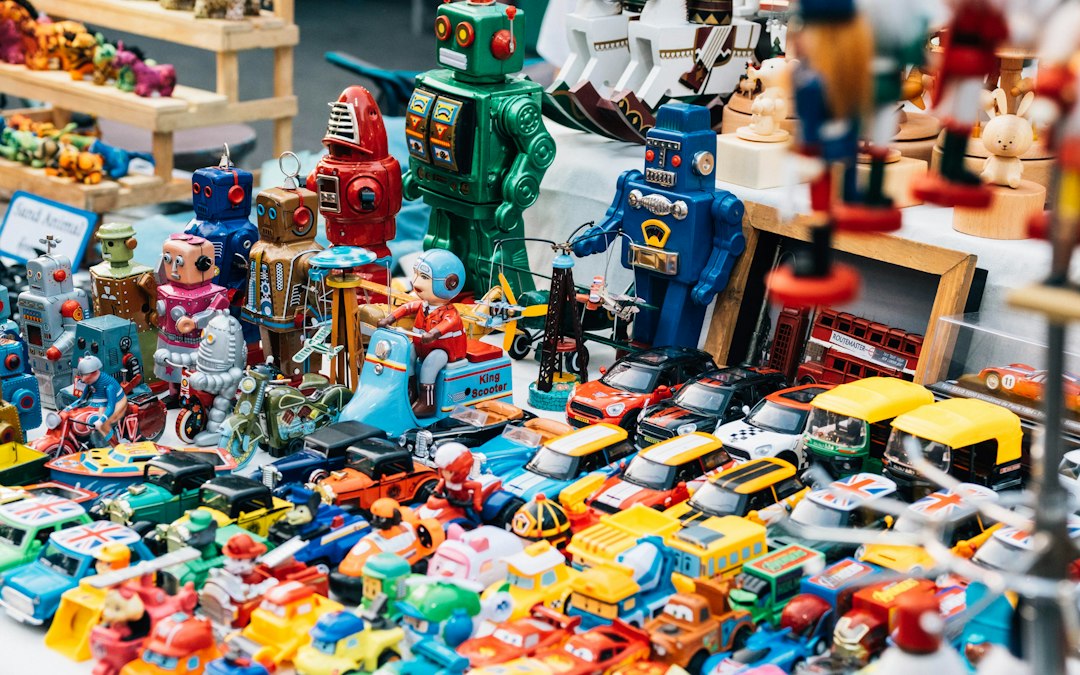
The yoyo is truly one of the oldest toys. Although its exact origin is unknown, the history of the yoyo dates back to 500 BC, to Ancient Greece. Archaeological findings have revealed yoyo-like objects made of clay and stone from this period. Furthermore, there are records indicating the use of similar toys in Ancient China. Despite working with a simple mechanism (string and spinning disk), the yoyo has maintained its popularity across different cultures for centuries. Modern yoyos, however, became a popular toy in the 20th century, especially in the 1920s, spreading from the Philippines to the USA.
Were there toys before the yoyo?
While the exact sequence of toys used before the yoyo is difficult to establish, according to archaeological findings, simpler toys existed before the yoyo (around 500 BC). In civilizations like Mesopotamia and Egypt, dating back to 2000 BC, simple play tools such as wooden or clay balls, small figures (e.g., animal figurines), and mud tablets were found. Games played by children with sticks and stones were also common. For instance, wooden dolls and spinning tops found in Egypt around 3000 BC can be considered older toys than the yoyo. The spinning top, in particular, was popular in different cultures before the yoyo and has examples dating back to 3500 BC.
The First Toys Being Human Figures
The creation of human figures (e.g., human or animal figurines, dolls) as the first toys by humans has been interpreted in various ways from a philosophical perspective. This situation can be examined through the lens of human nature’s creativity, its effort to understand itself, and its relationship with the universe. Here are some philosophical perspectives:
- Mimesis and Reflection (Plato and Aristotle): Ancient Greek philosophers, especially Plato, viewed art and the imitation (mimesis) of objects as a copy of reality. The creation of toys in human figures reflects humanity’s effort to understand itself and its environment through imitation. Aristotle, on the other hand, suggests that such creations stem from humanity’s desire for learning and aesthetic pleasure. Early toys enabled children to understand the world by imitating it, while also demonstrating adults’ need to symbolize their own existence.
- Symbolism and Identity (Anthropological Philosophy): Human-figured toys express humanity’s effort to symbolize its own self and society. Anthropologists and philosophers (e.g., Mircea Eliade) state that such objects can carry ritual and mythological meanings. Early humans, by creating their own figures as toys, perhaps reflected their identities, social roles, or spiritual beliefs. This could be an early indicator of humanity viewing itself as a “creative” being.
- Play and Existence (Heidegger, Gadamer): In modern philosophy, especially in Hans-Georg Gadamer’s philosophy of play, play is an existential activity of humans. Human-figured toys are a reflection of humanity’s process of questioning and rebuilding its own existence. Children, while playing with these figures, try to understand both themselves and the social world. From Heidegger’s perspective, these toys can represent humanity’s encounter with the concept of “Dasein” (being), that is, its effort to make sense of its own existence.
- Psychoanalytic Interpretation (Freud, Jung): Freud argued that toys are a way for children to express their unconscious impulses, while Jung suggested that such figures are connected to archetypes. Human-figured toys can be a reflection of the “self” archetype in the collective unconscious. Children, while playing with these toys, discover both their individual and collective identities.
- Creativity and Divine Imitation (Teological Philosophy): Some philosophical and theological interpretations view humanity’s creation of its own figure as an emulation of the divine creation process. Humans, by creating their likeness as a toy, effectively assume the “creator” role. This can reflect humanity’s desire for sovereignty and control over both itself and the universe.
In conclusion, the first human-figured toys are seen as a reflection of humanity’s effort to understand itself, imitate, and question its place in the universe. This carries a deep meaning at both individual and societal levels.
Read more · Culture & Art
 Beyond Craft: Giotto and the Birth of the Artist
 The Historical Perception of Blondness: From Prostitution to Divinity
 The Rhythm of Approval: Why Do We Clap?
 The Silent Language of the Table: A Cultural and Historical Journey Through Dining Etiquette
 Why Does Toyota Dominate in Cyprus?
 Why Do We Say “Cheese” for Photos? The Curious History of a Smiling Command
 The Cultural History of Knots: Threads of Meaning, from Practicality to Symbolism
 The Rituals at the Heart of the Global Stage: Why International Football Tournaments Are More Than Just a Game?
 The Ritual of Gift-Giving: More Than Just an Exchange
 The Ancient Language of Silence: A Cross-Cultural Journey
 What is Kintsugi? Understanding the Japanese Art of Golden Repair
 What is a Bonsai Tree? The Art of Fitting Nature into a Pot
Leave a Reply