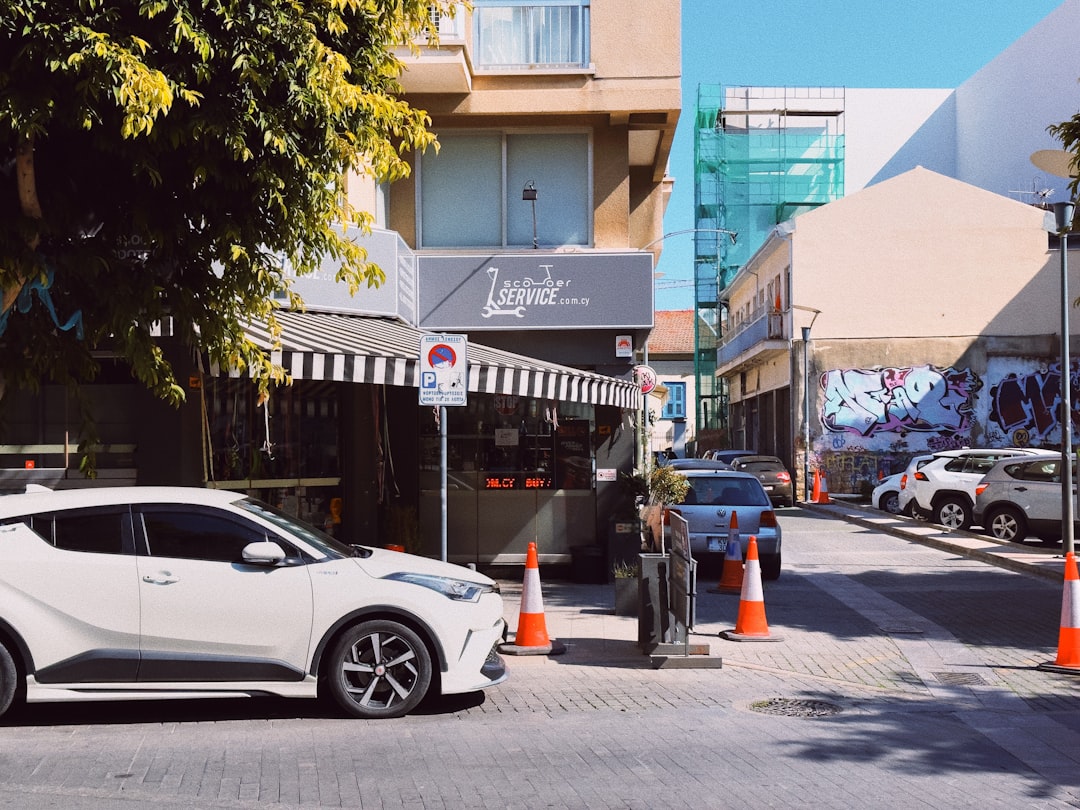
Toyota’s dominance in Cyprus (TRNC) actually has a very logical and entirely non-emotional reason: Supply chain and traffic rules.
I can summarize the matter under these three headings:
1. The Steering Wheel Issue (Japan Connection)
In Cyprus, traffic flows on the left, just like in the UK, meaning vehicles are right-hand drive. Traffic also flows on the left in Japan. Instead of entering the European vehicle market, Cyprus directly imports second-hand vehicles from the Japanese domestic market (JDM), where right-hand drive cars are very cheap and abundant.
2. The “Toyota Vitz” Invasion
The Vitz, the Japanese version of the model known as “Yaris” in Turkey, is like Cyprus’s unofficial national car.
Cost: Due to strict inspections in Japan, Japanese people replace their cars every 3-5 years. Cypriot car dealers bring these sparkling, low-mileage vehicles at very low prices.
Durability: The island’s climate is hot and humid (salty air). Toyota’s engines and air conditioning systems have the best mechanics to withstand this “hellish” heat.
3. The Maraş Legend (Closed Area)
There’s also a nostalgic/tragic dimension to it. In the Maraş (Varosha) region, which has been closed since 1974, brand new 1974 model Toyotas in the then Toyota dealership remain as they were. This situation caused the Toyota brand to remain like a “time capsule” in the island’s history.
In short: The answer to the question “What’s the deal with Toyota in Cyprus?” is; cheap spare parts, right-hand drive compatibility, and being the most durable machine in the heat. Seeing a Toyota Vitz or Aqua at every turn on the island is therefore inevitable.
Why Does Traffic Flow on the Left in Cyprus?
1. British Legacy (1878 – 1960)
Cyprus remained under the rule of the United Kingdom (England) for approximately 82 years, from 1878 until it gained its independence in 1960. During their administration of the island, the British integrated their own traffic rules, road infrastructure, and signaling systems onto the island. Since traffic flows on the left in England, the system was established this way in Cyprus as well.
2. Post-Independence “No Change” Decision
When Cyprus gained independence in 1960, or later when the island was divided in 1974, neither side (North or South) found it logical to change the direction of traffic. Because:
1. All roads, intersections, roundabouts (junction turns), and signs were designed for left-hand traffic.
2. The public had been accustomed to this system for decades.
3. Reversing the system to the right would require immense cost and infrastructure transformation.
Countries like Sweden (1967) and Iceland (1968) in Europe shifted traffic from left to right in the past, but since Cyprus is an island country, it had no land border neighbors. Therefore, they did not feel an urgent geographical necessity to align traffic with Europe or Turkey.
Read more · Culture & Art
 Incorrectly Drawn Horses in Art History
 Batman Alley in São Paulo
 Radiohead and Aphex Twin: A Musical Bond Evolving at the Borders of Electronic Music
 Scent Chess: A Sensory Experience
 Mexicans’ Love for Chili Peppers
 The Eras Tour & The Swiftie Phenomenon: A Cultural Anatomy of Collective Ecstasy
 The Ancient Language of Silence: A Cross-Cultural Journey
 The Grand Egyptian Museum: The World’s Largest Archaeological Museum Dedicated to a Single Civilization
 Have You Heard of Lacan’s Theory of Fantasy?
 The Curious Case of Buttons: Why Men’s and Women’s Shirts Differ
 The Crossed Fingers Secret: Why Do We Cross Our Fingers for Luck?
 The Tradition of Toasting: Why Do We Say ‘Cheers!’?
Leave a Reply