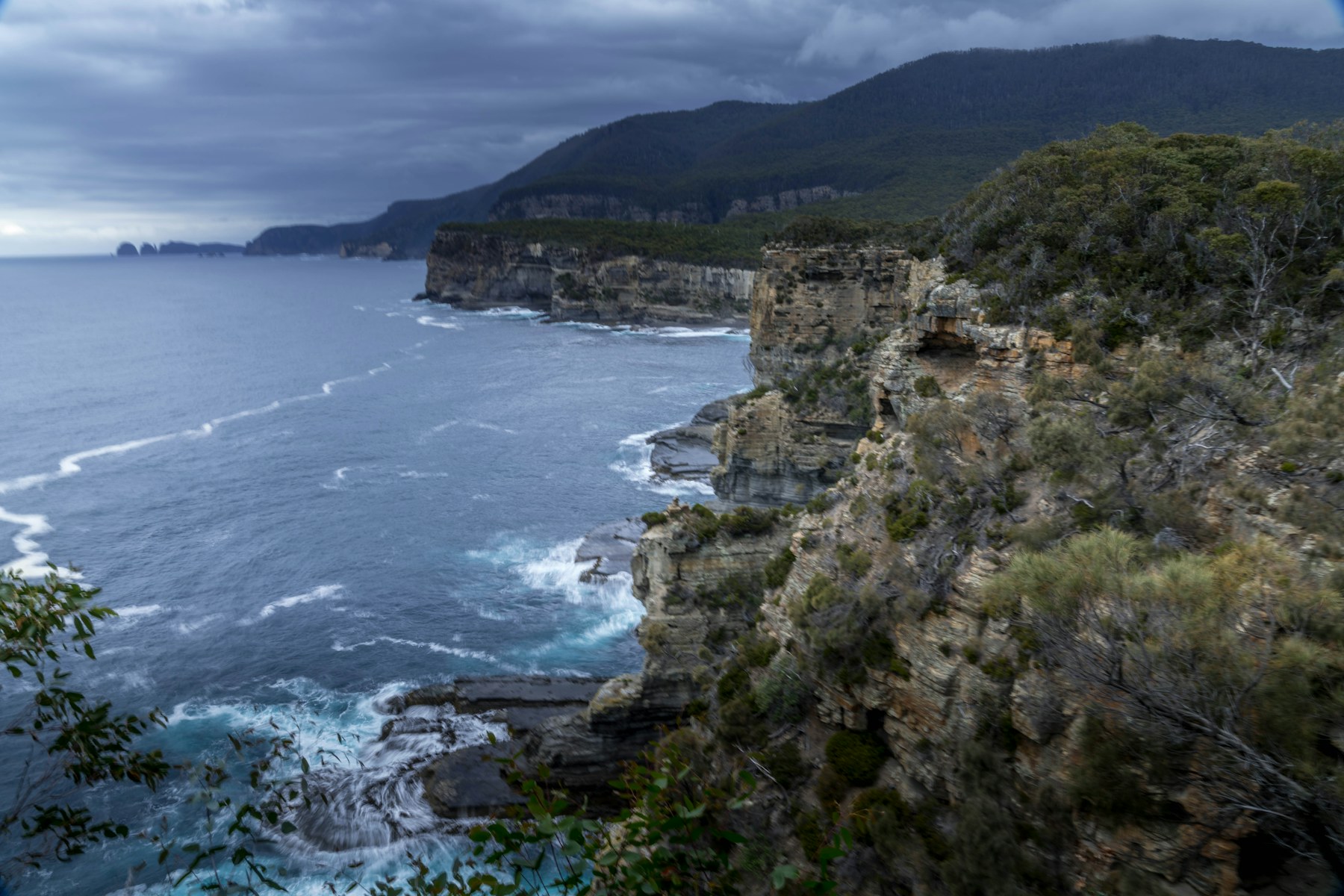
Those frequently referred to as the “exterminated people” in history books are the Tasmanian Aboriginals (Palawa people). Their story is one of humanity’s darkest chapters:
1. Isolation: For approximately 10,000 years, the Tasmanian Aboriginals lived a completely isolated life, cut off from the mainland.
2. Black War: With the arrival of the British in 1803, a great destruction began. British settlers and soldiers systematically hunted the indigenous people. This is known as the “Black War“.
3. Diseases and Exile: Those who survived the war lost their lives due to European diseases, to which they had no immunity, and poor conditions in forced exile camps (such as Flinders Island).
4. The “Last” Person: Truganini, who died in 1876, is considered to be the last “full-blood” Tasmanian Aboriginal. For this reason, history books long stated, “The Tasmanian people have completely vanished.”
Today, modern historians and indigenous rights advocates, while acknowledging the reality of “genocide,” object to the phrase “became extinct.” This is because, even though Truganini was the last full-blood indigenous person, the mixed-race descendants of the indigenous people (the Palawa community) still live in Tasmania today and strive to keep their culture alive.
Historical Isolation and First Contact
The Tasmanian Aboriginals (Palawa people) began living an isolated life approximately 10,000 years ago when rising sea levels cut them off from the Australian mainland. In 1803, with the establishment of the first permanent British settlement on the island, the situation changed for the indigenous population. At this time, it is estimated that there were between 4,000 and 7,000 indigenous people on the island.
The Black War and Exile
In the 1820s, the expansion of agricultural lands by British settlers led to violent conflicts. Martial law was declared in 1828, and in 1830, a human chain called the “Black Line,” involving thousands of settlers, was formed to drive the Aboriginals to one corner of the island. Approximately 200 survivors were persuaded by George Augustus Robinson to relocate to the Wybalenna camp on Flinders Island. There, due to malnutrition and European-borne diseases, the population rapidly dwindled.
The Genocide Debate and Today
Among historians, there is a divergence of opinion regarding the definition of what occurred in Tasmania. While historians like Henry Reynolds and Lyndall Ryan describe the process as a planned genocide and ethnic cleansing, some historians, such as Keith Windschuttle, dispute the term “genocide,” arguing that the deaths resulted from diseases and unavoidable frontier conflicts rather than state-sanctioned extermination. Although it was claimed that the people completely vanished with Truganini‘s death in 1876, today the mixed-race Palawa community, descended from European seal hunters and indigenous women, continues to live in Tasmania and maintain their culture. Truganini had no children during her lifetime. Today’s surviving Tasmanian Aboriginals are descended from other indigenous women who lived with or were held by European seal hunters in the Bass Strait islands in the early 19th century. Among the most well-known roots of this family tree are the daughters of indigenous leader Mannalargenna and Fanny Cochrane Smith, who carried her lineage to the present day with a large family. Truganini holds a place in history not as a figure who continued a lineage, but as a symbolic representative of the last generation who experienced the island’s original culture and language.
Fanny Cochrane Smith (1834–1905)
Fanny Cochrane Smith is considered the last person who could speak the original Tasmanian Aboriginal (Palawa) language fluently and is a historical figure from whom a very large portion of today’s Tasmanian Aboriginals trace their ancestry. She was born in the Wybalenna camp on Flinders Island and witnessed the years of exile and destruction of the indigenous people on the island.
She holds critical importance for the surviving Palawa community for two main reasons:
1. Continuation of Lineage: Unlike Truganini‘s childless death, Fanny Cochrane Smith had 11 children with her English husband, William Smith. A significant portion of the mixed-race Palawa community that preserves its culture in Tasmania today is directly descended from her.
2. Cultural Sound Recordings: In 1899 and 1903, she recorded her voice singing songs in the indigenous language onto wax cylinders, a new technology of the time. These recordings are the only auditory evidence in the world of the original Tasmanian languages and music. Today, the scientific basis for the Palawa community‘s efforts to reconstruct and revive their own language (palawa kani) comes directly from these sound recordings.
What If the British Had Not Arrived?
It is impossible to know for certain what Tasmania would be like today if the British had not arrived, but some predictions can be made based on archaeological and anthropological data from before 1803.
In the scientific world, there is a clear divergence of opinion regarding the cultural and technological evolution the Tasmanian Aboriginals would have experienced without external intervention:
1. Technological Degeneration Thesis: In the 1970s, archaeologist Rhys Jones, claimed that the Aboriginals had forgotten skills such as bone tool making, boomerang use, and scaly fish hunting during 10,000 years of isolation, suggesting that the people were in a slow technological “devolution” and heading towards a cultural collapse even without external intervention.
2. Conscious Adaptation Thesis: Modern archaeologists, anthropologists, and Palawa researchers today vehemently reject this thesis. New findings argue that the abandonment of bone tools or the cessation of fish consumption was not a mental decline but a rational, specialized adaptation made to adapt to the island’s changing ecological conditions and resources. According to this view, without external contact, the Aboriginals would have continued their sustainable hunter-gatherer lifestyles within the island’s boundaries in a natural balance.
Ecologically, the Aboriginals shaped the island’s vegetation using controlled burning methods they called “fire-stick farming.” Had there been no external intervention, the island’s geography and forest structure would have continued to be shaped by this indigenous agricultural/hunting management.
From a historical reality perspective, it is unlikely that the island would have remained completely isolated if the British had not come. In 1642, Dutch navigator Abel Tasman, and in 1802, French explorer Nicolas Baudin, organized expeditions to the island. Given the global race for colonization in the 19th century, it was highly probable that the island would have been colonized by the French or another maritime power in the absence of the British.
Related reading
 ScienceCats and Rats Invading New Zealand Later On
 ScienceCows Eating Chickens and the “Lal” Case
 ScienceWhy Are Zebras Striped Black and White?
 ScienceThe Incredible Escape Reflexes of Rabbits
 Culture & ArtIncorrectly Drawn Horses in Art History
 Life & HealthAustralia Determined the World’s Ugliest Color
 ScienceWhen Crows Get Sick, They Go to Ant Nests
 Life & HealthThe Solution to Cats Chewing Things; Citrus.
Read more · History
 History of Isparta Rose Cultivation
 The Story of Achmet Borumborad, the Fake Turkish Doctor in Ireland
 Olympos Ancient City: A Brief Summary
 Was Mozart poisoned?
 Divorce by Combat in the Middle Ages
 Accidental Felling of the World’s Oldest Tree
 was the aunty jack show’s color broadcast an accident?
 The Global History of Cannabis Prohibition
 Hitler’s Missing Grave
 A Seafaring Legend; Drinking Beer from a Body-Filled Barrel
 Argentina Sending Pregnant Citizen to Antarctica
 Washing Clothes with Urine in Ancient Rome
Leave a Reply