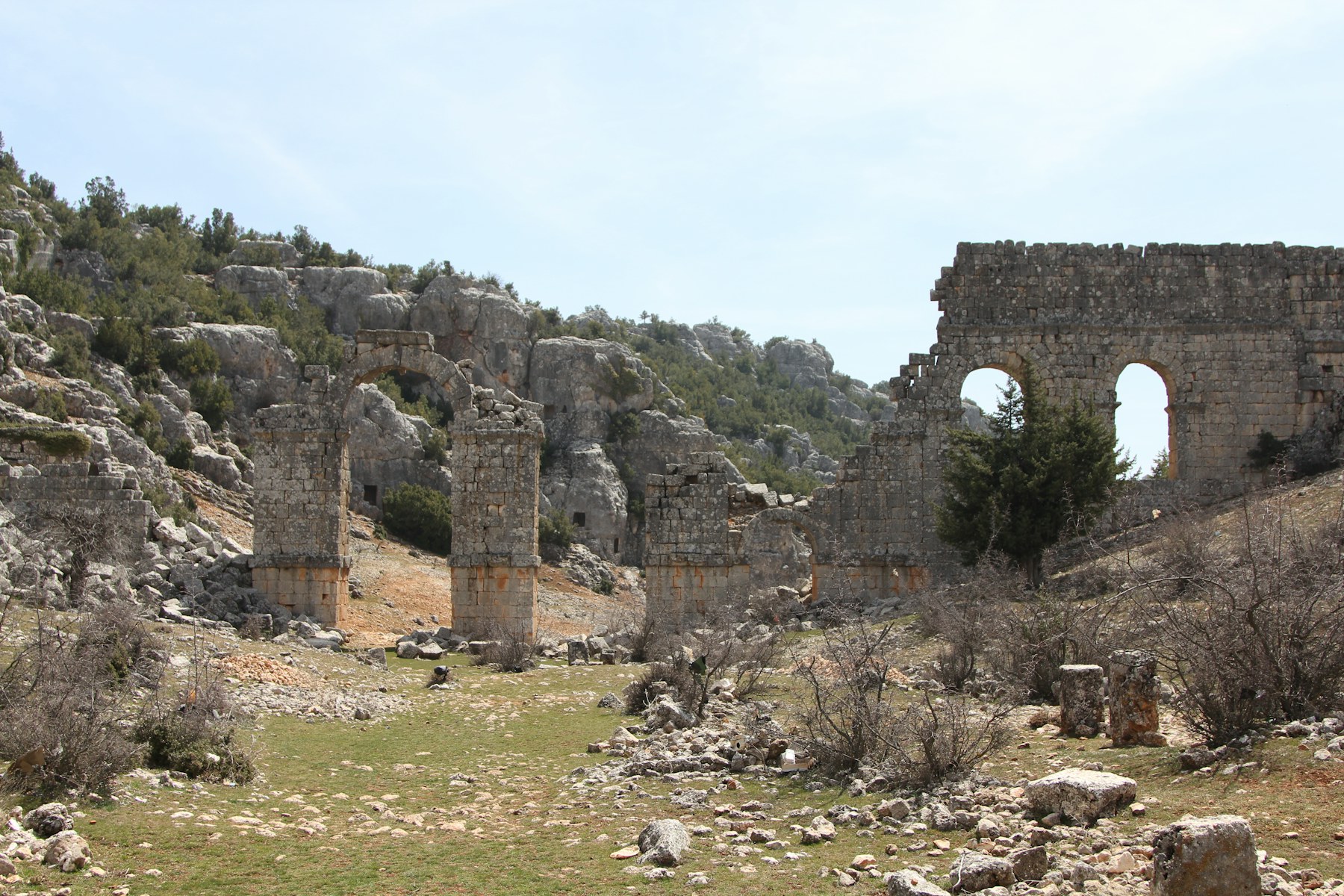
The original and founding people of Olympos ancient city were the Lycians.
Looking at the historical process of the city, only one people did not remain here; over time, different communities dominated it due to the dynamic structure of the Mediterranean. The peoples and communities that dominated the city according to their periods are as follows:
Inhabitants of Olympos Ancient City
- Founding People: Lycians
Olympos was one of the 6 most important cities of the Lycian League, known as the “Land of Light” in antiquity. The people living in this elite city, which had 3 voting rights in the League’s assembly, were the Lycians, one of the indigenous peoples of Anatolia who spoke their own unique language (Lycian). - Pirate Period: Cilicians
By the 1st century BCE, Cilician pirates, taking advantage of the weakening central authority, captured the city. The pirate chief Zeniketes made Olympos his base. During this period, along with the local Lycian population, pirate groups and warriors from all over the Mediterranean lived in the city. - Roman and Byzantine People
In 78 BCE, the Roman commander Servilius Isauricus cleared the city of pirates and annexed it to Roman territory. After this process, the city was rebuilt, and Romans and the eventually Christianized Byzantine (Eastern Roman) people began to live here. The city became an important episcopal center during the Byzantine period. - Genoese and Venetians
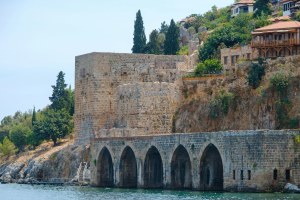
By the Middle Ages, especially Genoese and Venetian seafarers, who held control over Mediterranean trade, used Olympos as a port base and a castle. Some castle ruins seen today along the river date from this period.
The origin and identity of Olympos are based on the Lycians; however, throughout history, Romans, Cilician pirates, Byzantines, and Italian maritime peoples also left their mark on these lands. From the 15th century onwards, with the complete dominance of the Ottoman Empire in the region, the city lost its importance and was evacuated.
Before the 4th and 15th centuries (i.e., before Ottoman rule), like many port cities in the Mediterranean and Aegean, Olympos and its surroundings were a stopover for Genoese and Venetian ships and used as a trade colony.
However, it is useful to clarify a historical confusion here:
Not to be Confused with Ancient Period Pirates
According to historical records, the biggest pirate period for Olympos is much older: the 1st century BCE.
The pirates who ruled the city until Rome recaptured it in 78 BCE were not the Genoese, but the Cilician pirates (indigenous pirate groups from southeastern Anatolia).
Where Does the Name “Porto Ceneviz” Come From?
Porto Ceneviz Bay, located between the Adrasan and Olympos regions of Antalya, with its back to the majestic Musa Mountain, takes its name and story from the Genoese (Genoese), one of the most powerful maritime and merchant nations of the Middle Ages.
The true story of the bay lies in its use for centuries as a perfect natural sanctuary and secret pirate base.
Geographical Trap and Secret Harbor
The most important factor shaping the story of Porto Ceneviz is its geographical structure. The bay is shaped like a pocket, completely hidden from view when looking from the open sea. Musa Mountain behind it cuts off all land connections like a sheer wall. In the Middle Ages (between the 11th and 15th centuries), Genoese sailors establishing trade colonies in the Mediterranean and local pirates discovered this bay. Sailors caught in storms or fleeing enemy ships could take refuge in this bay and become completely invisible. The Italian word “Porto” (Harbor) comes from this; thus, it is literally “Genoese Harbor“.
Traces of History on the Slope
When looking carefully at the steep cliffs and slopes around the bay, remnants of castles and watchtowers can be seen. The Genoese built these small fortifications or repaired and used existing ancient ruins to protect this strategic point, observe trade ships in the Mediterranean, and safely take refuge in the bay.
The Enduring Legend: Pirate Mud
The story of the bay continues to be kept alive today with a fun ritual. The black mud in the inner parts of the bay has become a popular activity for visitors arriving by tour boats, who spread it on their bodies. In local narratives, this situation is also referred to as the “Pirate Ritual,” referring to the old days when pirates hiding in the bay used this mud to protect themselves from the sun and camouflage themselves when they came ashore.
Today, Porto Ceneviz, still without road access, is a pristine paradise that is a habitat for Mediterranean seals and Caretta Carettas, preserving the mystery of medieval seafarers.
Related reading



Read more · History
 Is Monaco a Country?
 The Global History of Cannabis Prohibition
 Why did the war between Iran and Israel start?
 France Sinks Greenpeace’s Ship
 Accidental Felling of the World’s Oldest Tree
 The Battle of Los Angeles in 1940
 Steve Jobs’s Drug Use in His Youth
 When was Denmark last threatened?
 Rescue of Jews Exiled from Spain by the Ottoman Empire
 A Seafaring Legend; Drinking Beer from a Body-Filled Barrel
 The Timeless Legacy of Tattoos: Stories Etched on Skin
 Bees and the Invention of Paper
Leave a Reply