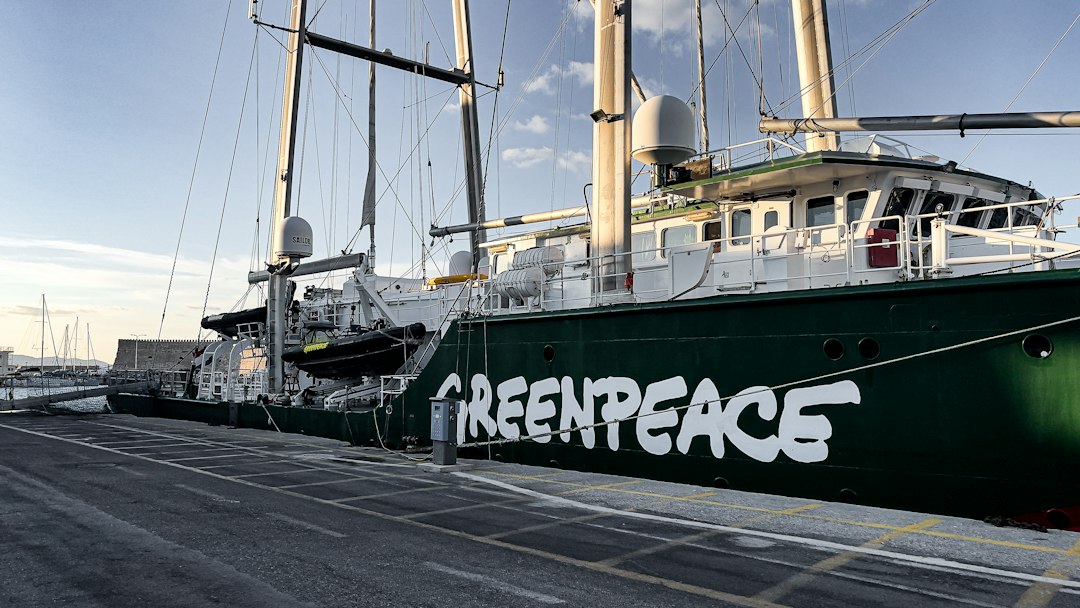
France sank Greenpeace’s Rainbow Warrior ship to prevent planned protests against nuclear weapons tests in the Pacific Ocean.
Development of the Incident (July 10, 1985)
At that time, France was conducting nuclear tests in the Mururoa Atoll in French Polynesia. Greenpeace planned to send a fleet of action with its Rainbow Warrior ship to the region to bring these tests to global public attention and protest them.
To stop this protest, agents of the French foreign intelligence agency (DGSE) placed underwater mines on the hull of the ship, which was anchored in New Zealand’s Auckland Harbor. As a result of the explosions, the ship sank, and a Greenpeace photographer named Fernando Pereira lost his life.
Aftermath and Confession
In the first months after the incident, the French government claimed it had no involvement in the attack. However, an investigation conducted by the New Zealand police revealed the scandal when two French agents (Alain Mafart and Dominique Prieur) were caught with fake passports. Following increased international pressure, on September 22, 1985, French Prime Minister Laurent Fabius held a press conference and confessed that French agents had sunk the ship. After this development, French Defense Minister Charles Hernu was forced to resign.
What Happened After the Attack?
Following the attack, significant developments occurred in legal, diplomatic, and financial areas. Although France was forced to pay compensation and apologize due to international pressure, the caught agents did not serve their full sentences.
Trial and Imprisonment of the Agents
French agents Alain Mafart and Dominique Prieur, caught by New Zealand police, were brought before a New Zealand court in November 1985. The agents pleaded guilty to charges of “manslaughter” and “malicious damage to property” and were sentenced to 10 years in prison each.
UN Mediation and France’s Breach of Agreement
France threatened New Zealand with economic sanctions (threatening to block the entry of New Zealand products into the European market) for the agents’ repatriation. With the mediation of United Nations Secretary-General Javier Pérez de Cuéllar, an agreement was made in 1986:
1. The agents would be released from prison and transferred to the French military base on Hao Atoll in the Pacific, where they would be detained for 3 years.
However, France did not comply with this agreement. It brought agents Mafart back to France in 1987 and Prieur in 1988, citing health reasons, and both were released. The agents were hailed as heroes in France and were later promoted.
Compensations Paid
- New Zealand: France issued an official letter of apology to the New Zealand government and paid 13 million New Zealand dollars (approximately 7 million US dollars) in compensation.
- Greenpeace: As a result of the process taken to the International Court of Arbitration, France was ordered in 1987 to pay 8.1 million US dollars in compensation to the Greenpeace organization.
- Deceased Photographer: Compensation was paid by the French government to the family of Fernando Pereira, who lost his life.
Political Consequences
- New Zealand’s Anti-Nuclear Stance: The incident caused a major reaction in New Zealand society. The New Zealand government passed a law in 1987 declaring the country a nuclear-free zone (prohibiting nuclear-armed or nuclear-powered ships from entering NZ territorial waters).
- France’s Image: The attack caused France to suffer a heavy loss of international prestige. Despite this, France continued its nuclear tests in the Mururoa Atoll until 1996.
Its connection with New Zealand was merely that the ship had temporarily docked in Auckland Harbor during its anti-nuclear test protest voyage in the Pacific.
Because the attack occurred within New Zealand’s sovereign borders (in a national harbor), caused the loss of one life, and was a covert sabotage operation carried out by a foreign state, New Zealand became directly involved in the incident and conducted the legal process.
Leave a Reply