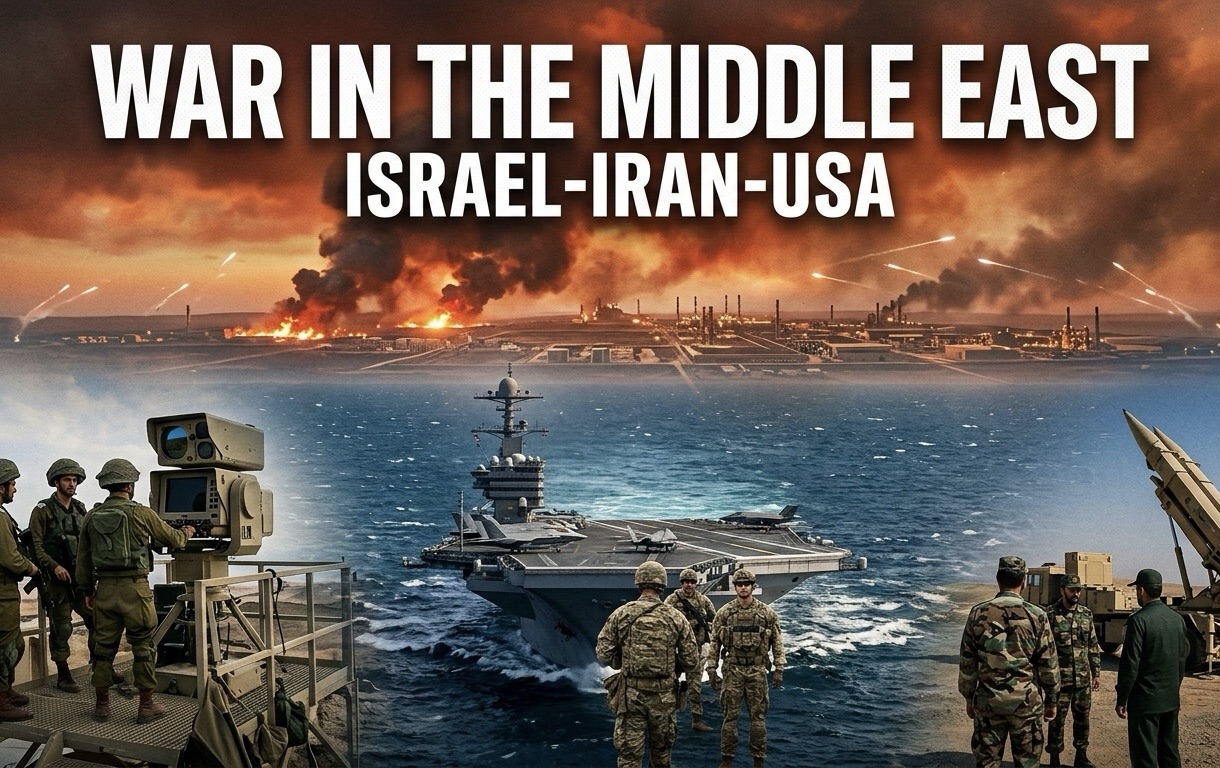
While the tension between Iran and Israel has been a decades-long “shadow war,” events in 2024 and 2025 transformed it into a direct confrontation. As of today (February 28, 2026), the situation is critical. The primary reasons for the escalation include:
• Nuclear Program & Preemptive Strikes: Israel views Iran’s nuclear program as an existential threat. In 2025, Israel launched large-scale airstrikes to halt Iran’s nuclear progress, aiming to weaken the regime’s military capabilities.
• Shift from Proxy to Direct Conflict: Following years of conflict via Hamas and Hezbollah, the breaking point occurred in 2024. The strike on the Iranian consulate in Damascus and the subsequent assassinations of high-ranking leaders (Haniyeh and Nasrallah) led to Iran’s massive ballistic missile responses, known as “Operation True Promise.”
• The June 2025 “12-Day War”: A period of intense aerial warfare occurred in mid-2025. Although a ceasefire was reached, it failed to provide lasting peace.
• The February 2026 Crisis: The current direct conflict was triggered by the total collapse of nuclear negotiations and the launch of a new “major operation” by Israel and the U.S. to permanently disable Iran’s strategic assets.
Why did the United States enter this war?
The U.S. involvement transitioned from passive support to active combat, especially following the return of the Trump administration’s “Maximum Pressure” policy. The main drivers are:
• Nuclear Proliferation as a “Red Line”: After the failure of the Geneva talks in early February 2026, the U.S. classified Iran’s refusal to stop uranium enrichment as an immediate global security threat, justifying “preemptive action.”
• Operation “Lion’s Roar”: The U.S. and Israel launched a joint operation with the stated goal of not just hitting nuclear sites, but also dismantling the regime’s military infrastructure and ballistic missile programs.
• Energy Security (Strait of Hormuz): Iran’s threats to close the Strait of Hormuz—the world’s most vital oil transit point—prompted the U.S. to deploy its largest naval task force since 2003 to ensure global energy flow.
• Total Alliance with Israel: Under the current administration, the U.S. has synchronized its regional strategy entirely with Israel, viewing this conflict as an opportunity to permanently neutralize Iranian influence in the Middle East.
Note for your content: These summaries reflect the geopolitical landscape as of February 2026.
Read more · History
 The Story of Achmet Borumborad, the Fake Turkish Doctor in Ireland
 Argentina Sending Pregnant Citizen to Antarctica
 A Seafaring Legend; Drinking Beer from a Body-Filled Barrel
 was the aunty jack show’s color broadcast an accident?
 Stalin’s Photo Manipulation Practices
 When was Denmark last threatened?
 The Global History of Cannabis Prohibition
 Is Monaco a Country?
 Bees and the Invention of Paper
 France Sinks Greenpeace’s Ship
 Was Mozart poisoned?
 The Timeless Legacy of Tattoos: Stories Etched on Skin
Leave a Reply