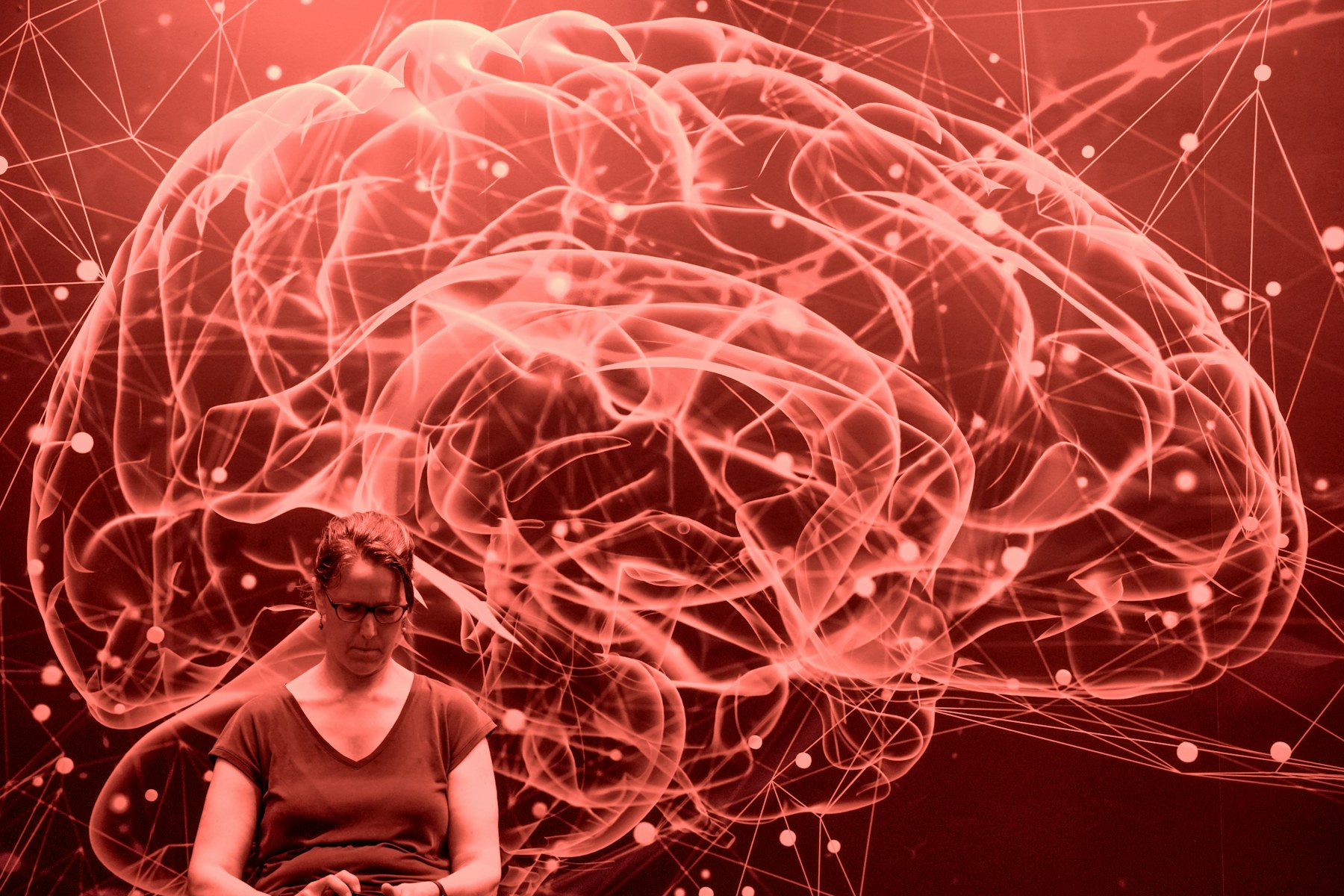
How Motherhood Changes Women’s Brain Structure
Motherhood directly and fundamentally changes a woman’s brain. This is not merely a psychological adaptation or a “maternal feeling,” but a neurologically proven somatic process. Neuroimaging (MRI) studies show that during pregnancy and postpartum, the female brain structure reshapes itself (neuroplasticity) to focus on childcare and survival, under the influence of hormones.
The fundamental mechanisms behind this transformation and the changes in the brain are as follows:
Decrease in Grey Matter (A “Pruning” and Specialization Process)
Research has revealed a significant decrease in the volume of grey matter in the mother’s brain during the transition from the gestational period to the postpartum period. While this may initially sound negative, it is actually not a weakening, but a more efficient and focused network formation (synaptic pruning) process, much like a sculptor chiseling marble. The brain contains two main types of tissue: grey matter and white matter. Grey matter consists of the cell bodies of nerve cells (neurons) and is the center for higher cognitive functions such as information processing, decision-making, emotion, memory, and muscle control. This reduction in volume increases the mother’s capacity to perceive her baby’s slightest coo, cry, or change in facial expression. Regions responsible for social cognition are effectively sharpened during this process.
The decrease in grey matter volume in the brain during pregnancy is not a mental decline, but rather a neurological specialization and “synaptic pruning” process that the brain undertakes to focus on infant care. Just as less used paths are closed off and main highways are expanded, the brain clears out connections it deems unnecessary for the moment, thereby accelerating vital processes.
- Enhanced empathy ability: Social cognition networks are sharpened, allowing the mother to intuitively and much faster decipher the facial expressions, different crying tones, and needs of her non-verbal baby.
- Increased mental efficiency: Resources are entirely directed towards maternal and survival tasks, maximizing the capacity for infant-focused attention.
- Rapid threat analysis: Selective attention to environmental stimuli increases, so that potential dangers directed at the baby are instantly recognized, and defense reflexes are activated immediately.
The Maternal Circuit and the Role of Hormones
Regions of the brain that manage empathy, motivation, and reward mechanisms (especially the amygdala, prefrontal cortex, and hypothalamus) are restructured under the influence of intense hormones such as estrogen, progesterone, oxytocin, and prolactin secreted throughout pregnancy:
- Amygdala (Threat Perception and Vigilance): The amygdala, responsible for ensuring the baby’s safety, grows in volume and becomes hypersensitive. This enables the mother to develop an extraordinary alertness and protective reflex against potential dangers in the environment (this is the neurological basis of “maternal instinct”).
- Reward System (Dopamine): Looking at the baby, making eye contact, or seeing their smile triggers dopamine release in the mother’s brain. This makes infant care biologically the highest “reward,” providing the strength to continue despite fatigue.
Increase in Empathy and Theory of Mind Skills
Brain networks responsible for understanding the intentions, emotions, and needs of others (e.g., the temporoparietal junction) become more active postpartum. This intuitive ability to understand what a non-verbal baby needs (is it hungry, gassy, scared?) emerges thanks to structural strengthening in these brain regions.
How Long Do These Changes Last?
Neuroimaging studies show that these structural changes in the brain last at least 2 years, and some permanent optimizations in certain regions are maintained throughout a woman’s life (reinforced by maternal experience).
In summary; motherhood does not “shrink” or weaken the brain; on the contrary, it restructures it, transforming it into a multidimensional center of empathy, threat analysis, and compassion.
The Process After the Second Child
With the second (or subsequent) child, things work quite differently compared to the first! The massive, structural “reconstruction” and shock effect experienced by the brain with the first child are not repeated with the same intensity in subsequent pregnancies. This is because the brain has already walked the path of motherhood.
The changes experienced in the brain and mental dynamics with the second child are as follows:
-
Neurological Changes Are Milder or “Selective”
In the first pregnancy, the brain virtually builds a construction site from scratch to become a mother, and a significant pruning/restructuring occurs in the grey matter.
With the second child, the neural pathways are already laid. The brain says, “I know this path.” Therefore, changes in grey matter are much less dramatic or more targeted (regional) compared to the first. Since the mother’s brain is already adapted to motherhood mode, the changes are smoother. -
Amygdala and Threat Perception Calm Down
With the first child, the amygdala (the region that perceives threats and dangers) is virtually on red alert; panic levels soar at the slightest sneeze, breathing sound, or cry.
With the second child, the mother has gained experience. The brain has learned that not every cry or cough is a catastrophe. The amygdala’s reaction threshold is a bit higher, which allows the mother to be calmer, more practical, and more self-assured with the second child compared to the first (we can neurologically call this an “increase in emotional regulation capacity“). -
Multitasking and Prioritization Peak
With the second child, the equation at home becomes more complex: one must now attend to both a baby and a first child who needs attention.
The prefrontal cortex (the center for planning, decision-making, and executive functions) develops much more practical algorithms to cope with multiple crises simultaneously and manage resources (time, energy). The mother mentally masters managing two different worlds at the same time.
Motherhood is a dynamic adaptation process that permanently transforms a woman’s brain not only psychologically but also physically and structurally. We can summarize this neurological evolution in two main stages:
- First Pregnancy (Emotional Construction Process) The brain builds a brand new infrastructure to establish the mother-baby bond. Centers for empathy, compassion, and threat perception (amygdala) are strengthened. Thanks to the “pruning” in the grey matter, the brain becomes hypersensitive, vigilant, and focused on the baby’s needs and potential threats in the outside world.
- Second Pregnancy (Operational Optimization) Since the brain has already learned how to form an emotional bond, it shifts its energy to practical management. As the University of Amsterdam study indicates, with the second child, the brain enters “manager” mode. To meet the needs of multiple children simultaneously, control divided attention, and manage crises, the brain’s attention and physical coordination networks (dorsal attention and somatomotor networks) are strengthened.
In short; while in the first child the brain transforms into a compassionate and vigilant protector, in the second child it evolves into a practical and agile orchestra conductor capable of multitasking during crises.
Related reading
 Life & HealthAustralia Determined the World’s Ugliest Color
 Life & HealthRoseto Town; No Deaths from Heart Attack Under 55
 ScienceDoes Smelling Flowers Develop Our Brain?
 Life & HealthHow Do Panic Attacks Start?
 ScienceIs Fear a Simulation?
 ScienceThe Enigma of Deja Vu
 Culture & ArtMalbrona’s Birth as a Women’s Cigarette
 ScienceCrows Attacking Masked Men for 15 Years Due to an Experiment
Read more · Life & Health
 Is Car-Free Day a Global Event?
 Why Does the Scent of Perfumes We Spray Disappear from Us So Quickly?
 Does Intimacy Affect Hair Health? The Hormone Connection
 Were artificial nails invented for nail-biters?
 Which Foods Help Balance Our Hormones?
 The “Teeth” Secret Behind Longevity: Seedorf and the Milan Lab Legend
 Those who cannot lose weight despite eating little; have you heard of basal metabolism?
 The Solution to Cats Chewing Things; Citrus.
 Does Eating Pasta Make Us Happy?
 Is Spaying/Neutering Cats Healthy?
 How Hot Should Hair Be Washed?
 Is the Appendix a Forgotten Organ?
Leave a Reply