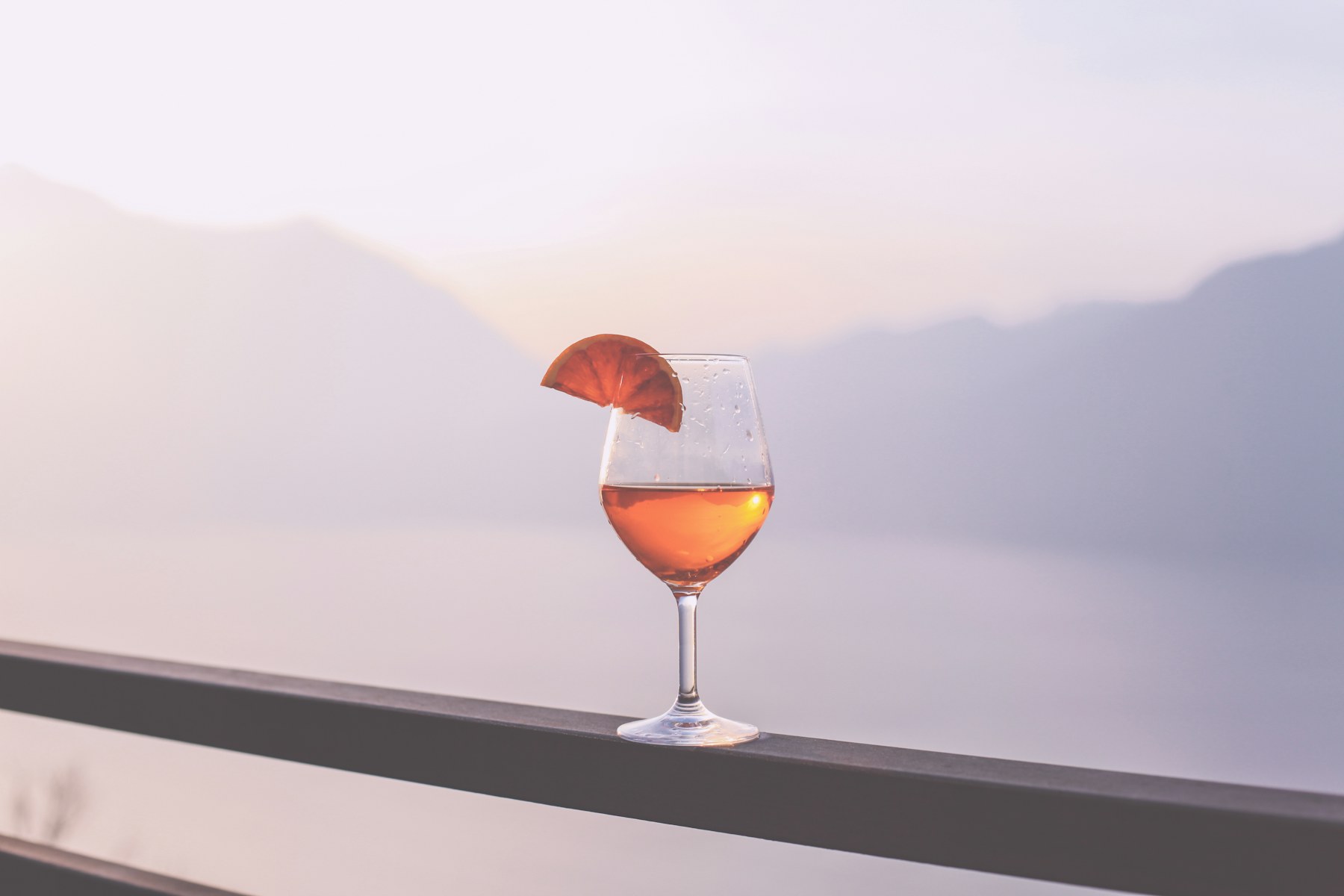
The word “Spritz” can actually have several different meanings depending on the context in which it is used. Here are the most common equivalents:
Different Meanings of the Word “Spritz”
- The Most Popular: Cocktail (Aperol Spritz etc.)
The meaning we hear most often nowadays is generally a type of Italian-style alcoholic beverage. It is essentially a mixture of these three:- Prosecco (sparkling wine)
- An aperitif drink (like Aperol or Campari)
- Soda/Mineral water
- As an Action: To Spray / To Squeeze
As a word of English origin, it means “to spray lightly“.- Perfume: The action of saying “I sprayed two spritzes on my neck” is a spritz.
- Kitchen/Plants: Used for squeezing lemon over a dish or spraying water on plants.
- Gastronomy: Spritz Cookie
Originating from German cuisine (Spritzgebäck), these buttery cookies are also given this name because their dough is “squeezed” onto a tray using a piping bag or mold.
Aperol Spritz: Origin and Story
The “Spritz” expression in Aperol actually represents the preparation method and history of this cocktail. Etymologically, it comes from the German verb “spritzen” (to spray, to splash).
Its story and meaning are as follows:
- Origin of the Name (The Soldiers’ “Spritz”)
In the 19th century, when Venice was part of the Austro-Hungarian Empire, Austrian soldiers in the region found Italian wines too strong for their taste. To lighten the wine, they asked for a small amount (a “spritz” worth) of water to be sprayed into it. So, at first, “spritz” was just a mixture of wine and water. - The Aperol Spritz Formula (The 3-2-1 Rule)
Over time, Aperol, an orange, bitter-sweet liqueur invented in 1919, and soda were added to this mixture. Today, the world-famous classic balanced formula was born:- 3 parts Prosecco (Italian sparkling wine)
- 2 parts Aperol (That famous orange drink)
- 1 part Soda (The final “spritz” touch)
Why Is Aperol Spritz So Popular?
- Aperitif: Comes from the word “Aperire” (to open); it is drunk before meals to stimulate the appetite.
- Low Alcohol: Because it is lighter than other cocktails, it can be drunk throughout the day.
- Color: Its iconic orange color, reminiscent of a sunset, has made it a symbol of “Italian summer“.
The Austro-Hungarian Empire and the Birth of Spritz
Aperol today seems like “Italy’s national drink“. But in fact, this drink was born out of necessity.
This Wine Is Too Strong!
In the 1800s, a large part of Northern Italy (Venice and its surroundings) was under the control of the Austro-Hungarian Empire. Austrian soldiers and diplomats who settled in the region began to drink Italy’s local wines (especially those from the Veneto region).
However, there was a problem:
- Austrians were accustomed to lighter beers and wines in their own country.
- Italian wines seemed too alcoholic and strong to them.
A Spritz (Spritzen)
To make this strong wine more palatable, the soldiers asked bartenders to spray a small amount of water (German: spritzen) into the wine. So the first Spritz was actually what you know as “diluted wine“.
From Water to Liqueur
Over time, this tradition changed:
- First: Just wine + plain water.
- Then: When mineral water (soda) was invented, carbonated water began to be used.
- Finally: In the 1920s, bitter-sweet liqueurs like Aperol were added to this mixture to add color and flavor.
In short: If Austrian soldiers hadn’t found Italian wine too heavy and asked for water to be sprayed into it, those famous orange glasses probably wouldn’t exist today. The ironic thing is that what the Austrians started to “lighten” has today become the biggest symbol of the Italian lifestyle.
Related reading
 Drinks & foodsWhy Is the Old Fashioned Glass and Cocktail Called Old Fashioned?
 Culture & ArtWhere is the Original David Statue?
 Drinks & foodsWhy Does Olive Brine Not Taste Like Olives?
 Culture & ArtThe Concept and Characteristics of Sprezzatura
 Culture & ArtThe Most Important Factor in the Development of Civilization; Gossip Theory
 Drinks & foodsFanta’s Emergence in World War II
 Life & HealthDoes Eating Pasta Make Us Happy?
 Drinks & foodsA Cocktail Classic; Porn Star Martini
Read more · Drinks & foods
 From French Cuisine to Mongols; Steak Tartare
 The World’s Most Expensive Meat and Beer-Fed Cows
 Are Peanuts Eaten with Beer? The Indispensable Part of Pub Culture
 George Franz: How Coffee Culture Came to Vienna
 Have You Ever Eaten Churros?
 The Functional Role of Foam in Cocktails
 What is Umami?
 What is Nepa Beer and NEIPA Beer?
 Did the First Restaurant Chef Rules Emerge from France?
 What Region Does Mint Belong To?
 When Did Beer Start Being Drunk Cold?
 What is called “bitter”?
Leave a Reply