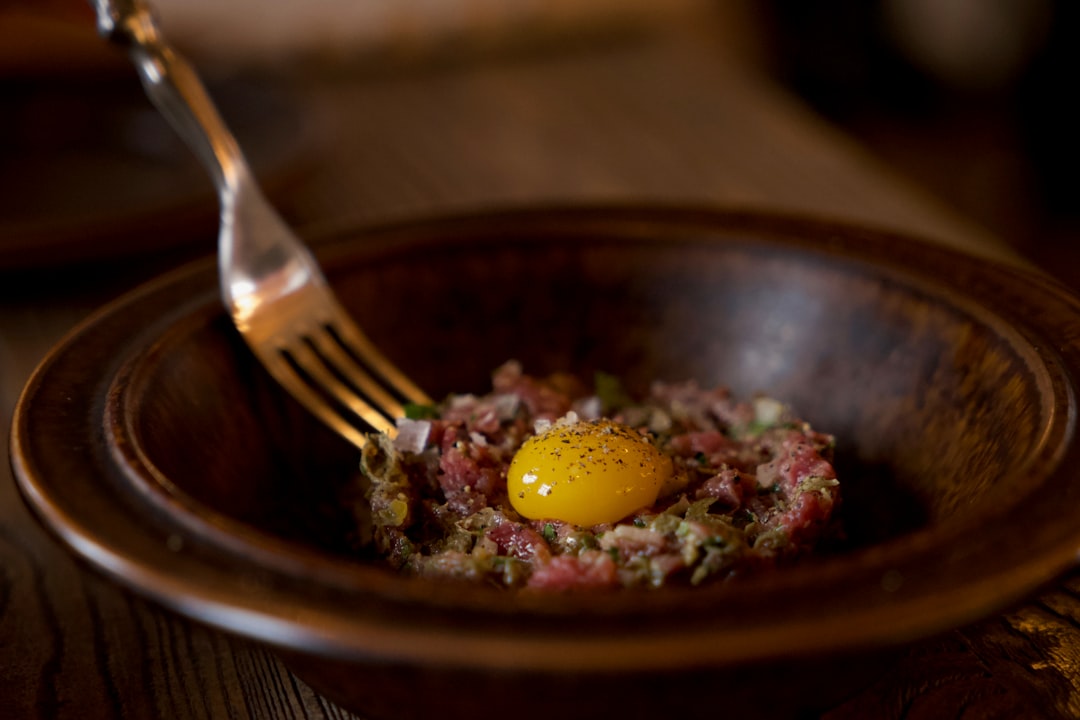
Steak tartare (Tatar beef), a classic French cuisine dish, is made by finely mincing raw beef with a cleaver or knife (a meat grinder is strictly not used) and seasoning it with various spices and sauces before serving.
Essential Components and Structure of the Dish
- Meat selection: Generally, the leanest and tenderest parts of the beef, such as sirloin or tenderloin, are used. Since it will be consumed raw, the meat must be very fresh, sinew-free, and of high quality.
- Sauce and Seasonings: The meat is mixed with finely chopped capers, gherkins, shallots, parsley, Dijon mustard, Worcestershire sauce, Tabasco, olive oil, salt, and black pepper.
- Presentation: It is usually shaped into a cylinder on the plate, with a hollow created in the center for a raw egg yolk. It is served with toasted bread slices (croutons) and sometimes french fries. The egg yolk and meat are mixed at the table before consumption.
Historical Origin
Although the name is attributed to the legend of Mongol/Tatar cavalrymen softening and eating raw meat under their saddles, modern Steak tartare was entirely shaped in French restaurants in the early 20th century. It initially got its name because it was served in French cuisine with “tartar sauce” (a mayonnaise-based sauce).
The famous story associated with Steak tartare and passed down through generations is based on the military lifestyle of the Mongols and Tatars, the nomadic warriors of the Middle Ages.
According to the legend, these nomadic tribes’ cavalrymen would place raw beef or horse meat they carried with them under their horses’ saddles when setting out on campaigns. Throughout the day’s journey, the movement, weight, and friction of the horse’s back would cause the meat to be crushed, its fibers broken, and a kind of “tenderized” effect, making it soft enough to be eaten raw. It was also claimed that the meat was lightly salted and marinated by the horse’s sweat. In the evening, when camp was set, soldiers would consume this softened meat raw, without cooking it.
However, when this popular story is examined by historians and culinary experts, it is largely a misconception. The actual situation is as follows:
1. The True Purpose of Meat Under the Saddle: Experts studying Mongol history confirm that nomads placed meat under their saddles; however, they did this not for eating, but to treat wounds, abrasions, and infections on the horses’ backs caused by prolonged riding. The raw meat acted as a kind of buffer, protecting the horse’s back.
2. Nomadic Meat Culture: Although dried meat (borts) formed the basis of the Mongol military ration, when they found fresh meat, they preferred to boil it in soups or cook it over fire rather than eating it raw.
3. European Perspective: The main reason for the spread of this legend in the Western world was the desire of European travelers (especially Italian and French writers) in the 13th and 14th centuries to portray the invading tribes from the East as “barbarians who didn’t even know how to use fire and ate raw meat.”
So, the gourmet French dish enjoyed today was born from the creativity of 20th-century Parisian restaurants combining raw meat with tartar sauce, rather than from Mongol horsemen’s saddle-under medicines.
Did They Consume That Meat?
No, they absolutely did not consume the meat they took out from under the saddle.
That meat, completely contaminated with horse sweat, dirt, hair, and saddle pressure, became a medical tampon used for medical purposes (to soften the wound on the horse’s back and prevent infection). Nomads were not ignorant about hygiene and meat quality; eating meat that had come into contact with bacteria from the horse’s skin and absorbed sweat would lead to the poisoning or illness of the entire army on a military campaign.
Did Mongols Consume Raw Meat?
However, the answer to the general question, “Did they consume raw meat?” is: Yes, but under very specific circumstances and not in this manner.
Mongols and Tatars consumed raw meat in the following situations:
1. Dried Meat (Borts): They would completely dry the meat in the sun and wind, turning it into powder. During campaigns, they would put this powder into hot water to make an instant nutritious soup. This meat was technically uncooked (raw) but safe because it was dried and fermented.
2. Extreme Emergencies: In situations of siege or complete entrapment, if there was nothing to make a fire (wood, dried dung, etc.) and they needed to survive, they could eat the meat of freshly killed animals raw. However, this was not a gourmet preference but purely a survival strategy.
Leave a Reply