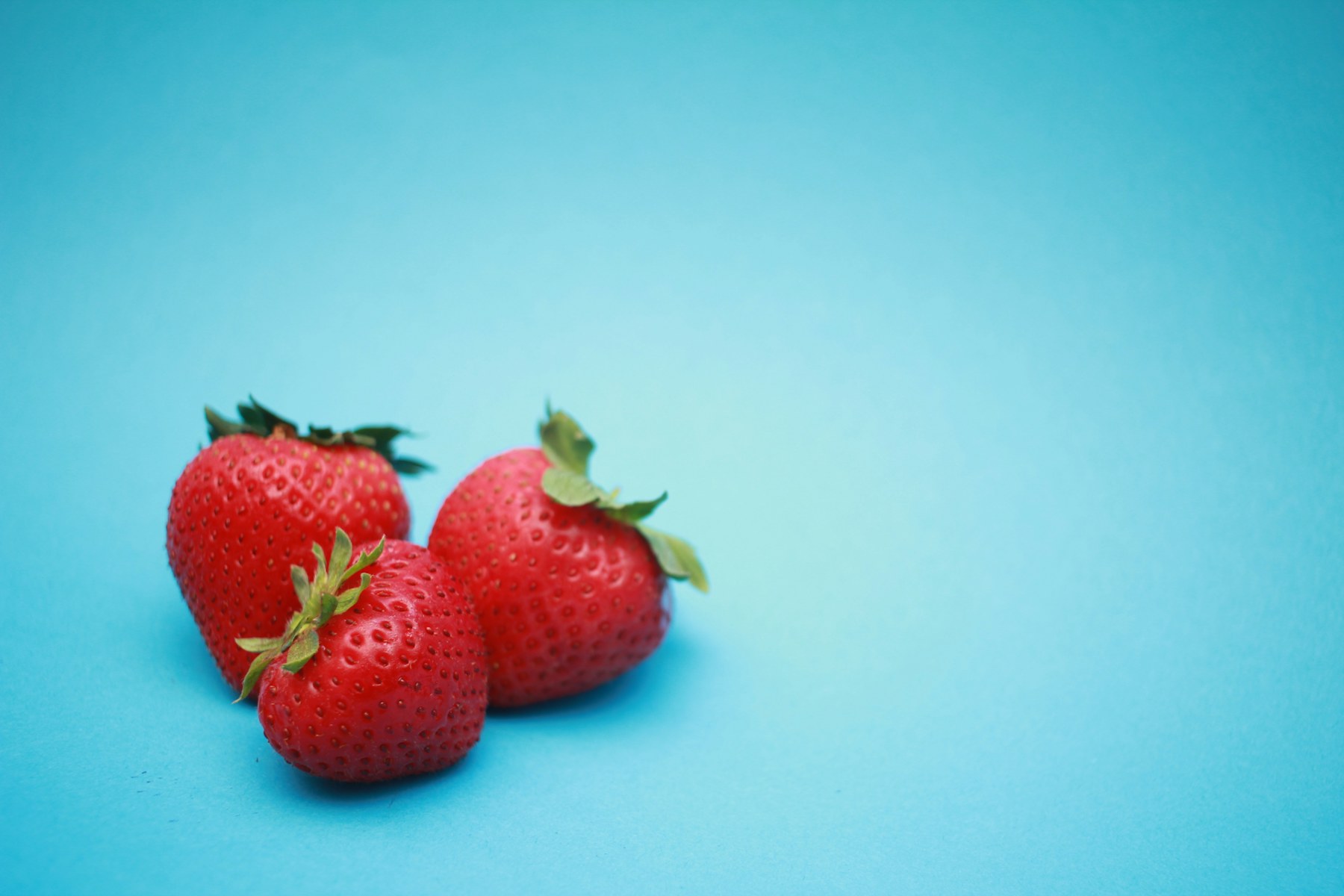
The origin and history of the strawberry are actually based on a quite interesting journey. Rather than a single point, the modern strawberry we eat today was formed by the combination of different continents.
The Homeland of the Strawberry: Ancient Origins and Modern Birth
Here’s what you need to know about the homeland of the strawberry:
- Ancient Origins (Wild Strawberry)
Wild strawberry species (small and very aromatic ones) grow naturally in many parts of the world. - Europe and Asia: Since Roman times, small wild strawberries have been known to grow in the forests of Europe.
-
America: Local wild species had also existed for thousands of years in the North and South American continents.
-
The Birth of the Modern Strawberry (Hybridization)
The large and plump strawberries (Garden Strawberry) we see in markets today emerged in the 18th century in France as a result of an accidental hybridization: - The Fragaria virginiana species brought from North America, and,
- The Fragaria chiloensis species, a large white variety brought from Chile (South America), were crossed.
Strawberry Production Centers in Turkey
When it comes to strawberries in Turkey, the most important centers that come to mind are:
- Mersin (Silifke): It is Turkey’s strawberry production center; a large part of the exports are made from here.
- Aydın (Sultanhisar): Known for its large and quality strawberries.
- Zonguldak (Ereğli): Known for its famous and aromatic Osmanlı Çileği (Ottoman Strawberry) (this variety is smaller and pink).
Although its wild form exists all over the world, the cultivated strawberry we eat today was born from the combination of species from the American continent in France. The emergence of the modern garden strawberry (Fragaria × ananassa) in France in the 18th century is a botanical genetic surprise that occurred when two different American species were planted side-by-side in the same garden.
The Accidental Story of the Modern Garden Strawberry
The story unfolded as follows:
-
Large Species from Chile
In 1714, French engineer and spy Amédée-François Frézier was sent to Chile to map Spanish fortifications in the region. There, Frézier noticed the Chilean strawberry (Fragaria chiloensis), which was much larger and fleshier than the wild strawberries in Europe, cultivated by the natives. On his return journey, he managed to bring 5 live samples of this plant by ship to the port of Brest in France. -
The Big Problem: The Plants Did Not Bear Fruit
These Chilean strawberry samples brought by Frézier were planted in gardens in Brittany and at the Royal Garden (Jardin des Plantes) in Paris. However, the plants bloomed for years but did not bear a single fruit.
At that time, the distinction between plant sexual organs was not yet fully understood. All the samples Frézier brought to France were female (pistillate) plants. Since there were no male Chilean strawberries of their own kind nearby to pollinate them, fertilization did not occur. -
Accidental Fertilization and Hybridization
In the 1740s, botanists and gardeners in the Plougastel region of Brittany began planting different species among the non-fruiting female Chilean strawberries to encourage pollination. One of these species was the dark red and aromatic Virginia strawberry (Fragaria virginiana), brought to France from North America.
The male pollen of the Virginia strawberry was carried by wind and bees to the female flowers of the Chilean strawberry. These two species from two different continents accidentally pollinated each other. -
The Birth of the Modern Strawberry
When the new seeds grown from this hybrid fertilization germinated, the resulting fruit had the best characteristics of both parent species: - It inherited intense aroma and dark red color from the North American species,
- And large size and plumpness from the South American species.
Botanist Antoine Nicolas Duchesne recognized this new hybrid, described it in 1766, and named it Fragaria × ananassa due to its pineapple-like aroma. All modern garden strawberries seen in fields and markets today are descended from this accidental pollination in the Plougastel gardens.
The name Fragaria × ananassa is still officially and actively used in both botanical literature and agricultural science today.
Fragaria × Ananassa: Meaning of the Botanical Name
Key points regarding the use of the name are:
-
Botanical Standard (Global Acceptance)
The Latin taxonomic name for all cultivated strawberries that are agriculturally produced, grown in fields, or bought from markets is still Fragaria × ananassa (or Fragaria ×ananassa). The International Plant Names Index (IPNI) and international taxonomy databases officially accept this name. -
Meaning of the “×” Sign in the Middle
The “×” (multiplication) sign in the middle of the name indicates that this species is not a pure species that evolved naturally, but rather was obtained by the hybridization (hybrid) of two different species (Fragaria chiloensis and Fragaria virginiana). -
Why “ananassa”?
In the 18th century, when French botanist Antoine Nicolas Duchesne described this hybrid, he chose this name because the fruit’s scent and taste profile slightly resembled a pineapple. Although there are thousands of newly bred strawberry varieties today (e.g., Albion, Camarosa, Festival, etc.), all of them are taxonomically considered subspecies/cultivars (cultivar) of the Fragaria × ananassa species.
After Fragaria × ananassa was obtained, the transformation of the modern strawberry from a regional botanical curiosity into a global industry occurred through three main turning points in the 19th and 20th centuries.
The Global Rise of the Strawberry Industry
-
Railway Network and Logistics Revolution (Mid-19th Century)
It was impossible for a soft and highly perishable fruit like the strawberry to reach cities from fields. However, starting in the 1840s, the railway network that began in England and France completely changed logistics.
Strawberries collected in the town of Plougastel in Brittany began to be transported to the markets of London and Paris by train and steamship on the same day.
The demand of city nobility and the rising bourgeoisie for this “luxury and fresh” fruit caused production to explode. -
British and American Breeding Efforts
This hybrid, born accidentally in France, underwent a commercial revolution in the hands of British and American breeders: - Keens’ Seedling (1806): English gardener Michael Keens developed the first major commercial hybrid that multiplied the yield and durability of the strawberry. The fruits became easier to transport.
-
Wilson Strawberry (1851): This variety, developed by James Wilson in the USA, was resistant to harsh climate conditions and very suitable for mass production. It enabled the rapid spread of commercial strawberry fields in North America.
-
Cold Chain and Industrial Production (20th Century)
The widespread use of refrigerated transport vehicles (cold chain) transformed the strawberry from a seasonal and regional fruit into a product traded across continents all year round. In addition, the growth of the jam, ice cream, and pastry industries brought the industrial demand for strawberries to its peak.
Related reading
 Drinks & foodsThe Origin of Earl Grey Tea
 Drinks & foodsOnly One Pineapple Grows Per Plant
 Drinks & foodsThe Place of Couscous in North Africa
 Drinks & foodsFanta’s Emergence in World War II
 Drinks & foodsHave You Ever Eaten Churros?
 Drinks & foodsDid the First Restaurant Chef Rules Emerge from France?
 Drinks & foodsWhen Did Beer Start Being Drunk Cold?
 HistoryThe French’s Fear of Potatoes at One Time
Read more · Science
 The Myth of Using a MacBook as a Scale
 Woman Spent 500 Days in a Cave for Research
 Relationship Between Fear of Death and Right-Wing Tendencies
 Ozone Smell, Pre-Rain Scent
 The Truth That We All Come From Stars
 The Effect of Pineapple on Body Odor
 Shazam’s Presence in Our Lives Since 1999
 Floating Island Suddenly Appears in a Canadian Lake
 Toxic Gas Emissions from Teflon Pans
 How Does Coffee Change Touch Perception?
 Methane-Based Life Theory on Titan
 The creation of the world’s first webcam to monitor coffee
Leave a Reply