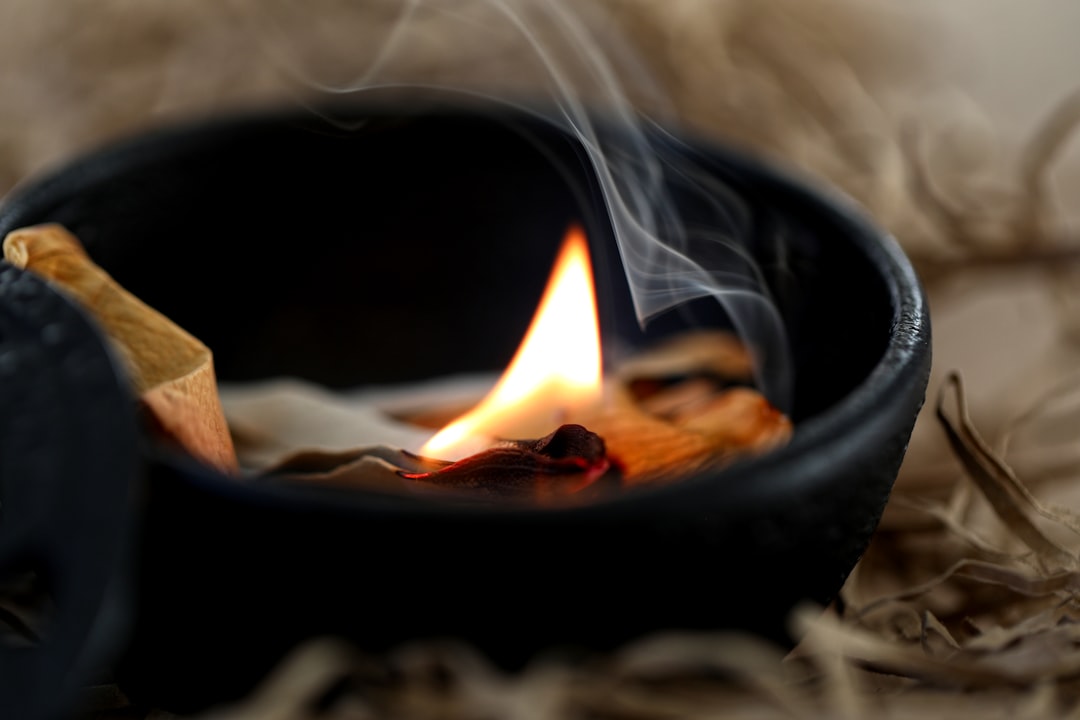
Sage Smoke; Myth and Facts
The claim that burning (smudging) sage cleans the air of bacteria or “purifies” it is a popular myth based on a misinterpreted scientific study.
Here are the scientific facts on this matter:
Origin of the Myth
When this claim spreads on the internet, it often refers to a study published in the Journal of Ethnopharmacology in 2007. This study stated that “medicinal smoke” reduced airborne bacteria in a closed environment by 94%. However, when looking at the details, there are two major problems:
- Sage was not used in the study. Researchers used a special mixture (hawan samagri) consisting of many different plants and woods native to India.
- Burning duration: This mixture was burned intensely in a closed room for a full hour. This is not the same as smudging for a few minutes at home.
The Real Effect of Smoke on Air
While hoping to eliminate airborne bacteria, burning sage (or any plant) in an enclosed space does not improve indoor air quality; instead, it decreases it.
* Particulate Matter (PM2.5): The combustion process produces fine smoke particles that can penetrate deep into the lungs.
* Respiratory Irritation: For individuals with asthma, allergies, COPD, or other respiratory conditions, airborne smoke is irritating and can trigger symptoms.
* Chemicals: The burning of any organic matter releases carbon monoxide and various volatile organic compounds (VOCs) into the air.
Does Sage Not Have Antibacterial Properties?
The sage plant itself has proven antibacterial and antimicrobial properties in laboratory settings. However, these beneficial properties are not active in the plant’s smoke; they are active in its extracts, essential oils (upon direct surface contact), or when brewed and consumed as a tea.
In summary: If you want to freshen or clean the air in your home, opening windows for cross-ventilation or using an air purifier with a HEPA filter is a much healthier and more definitive solution than burning sage. As for sage, if you only love its scent and attribute a ritualistic meaning to it, you should burn it in a well-ventilated room.
Does Hawan samagri work?
In short, yes, it serves a specific purpose and has a proven effect, but it is not a practical or healthy method for modern home cleaning.
The 2007 study we mentioned in the previous message was conducted on Hawan Samagri (or Havan Samagri). Here are the scientific details about what this mixture is and what it does:
What is Hawan Samagri?
Hawan Samagri is a special botanical mixture prepared to be burned in fire rituals (Havan or Yajna) in Hinduism. It does not contain random herbs, but numerous dried plants, roots, bark, seeds, and resins that have a place in the Ayurveda (traditional Indian medicine) system. The mixture often includes sandalwood, turmeric, camphor, cloves, various flower petals, and medicinal herbs.
How Does It Work Scientifically?
The reason the 2007 study garnered so much attention was that the mixture was indeed effective:
- Potent Antimicrobial Effect: When this mixture was burned for 1 hour in a closed room, it reduced the airborne bacterial population by over 94%.
- Persistence: Even after the smoke was cleared from the room, the level of airborne pathogenic (disease-causing) bacteria was observed to remain low for 24 to 30 hours.
- Mechanism of Action: When the plants in the mixture burn, their contained potent essential oils and active chemical components (e.g., camphor and eugenol in cloves) evaporate with the heat and mix into the air. These volatile molecules attach to the cell walls of airborne microorganisms, breaking them down and rendering them inactive.
Why Should It Not Be Used at Home?
The fact that Hawan Samagri kills airborne bacteria does not mean that inhaling it in an enclosed space is safe. Scientists researched this not as an air purification recommendation, but to measure the biological effects of a traditional practice.
* Smoke Toxicity: To create a “medicinal smoke” of sufficient intensity to kill bacteria, you would need to burn a fire in a closed room for a long time. This process produces massive amounts of Carbon Monoxide (CO) and Fine Particulate Matter (PM2.5).
* Lung Damage: In modern medicine, exposing the lungs to dense smoke to get rid of airborne bacteria is definitely not recommended. Fine particles penetrate deep into the lungs, leading to cellular damage, asthma attacks, and long-term respiratory diseases.