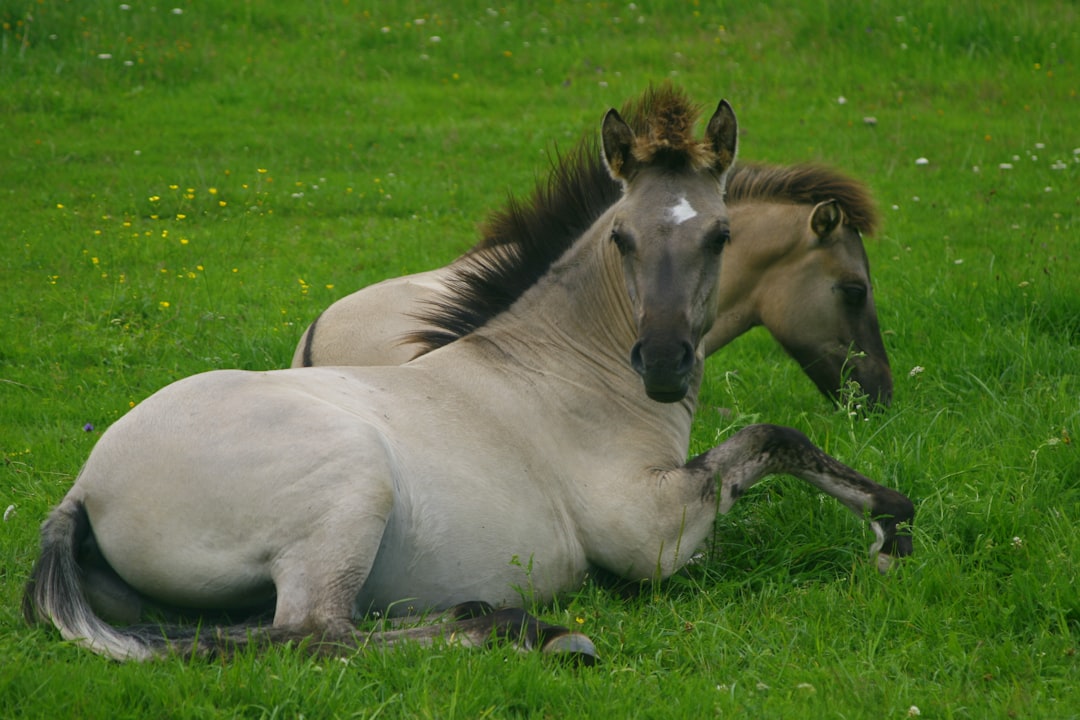
The last true wild horse species in the world is the Przewalski’s horse (scientifically known as Equus ferus przewalskii).
These horses are the only species that are not descended from domesticated horses and are genetically distinct from them (even their chromosome numbers are different). The story of this species, native to the Central Asian steppes, is quite interesting:
The name “Przewalski” actually comes from the Polish explorer Nikolai Przhevalsky, who introduced this species to the scientific world in 1879. So it’s not the horse’s own name, but the surname of the person who “discovered” it.
1. Why is it Called “Wild“?
In biology, the term wild is used for species that have never been domesticated by humans or whose genetics have not been bred.
- Domesticated Horses: Bred by humans thousands of years ago (all today’s riding horses).
- Feral Horses: Like Mustangs, those that were once domesticated and escaped back into nature.
- Przewalski’s: Not the ancestor of horses, but the only branch that has never submitted to humans and whose genetics remain untouched. Although attempts were made to domesticate them, they were unsuccessful due to their very wild and stubborn character.
2. Genetic Difference: The “Chromosome” Issue
The most concrete evidence that distinguishes Przewalski’s horses from all other horses is found in their cells:
- A typical domesticated horse has 64 chromosomes.
- A Przewalski’s horse has 66 chromosomes.
This difference proves that they are not the “ancestors” of domesticated horses, but a different branch that diverged from a common ancestor thousands of years ago. In other words, Przewalski’s is not the father of the domesticated horse, but like its “uncle” who never married and remained wild.
3. Botai Horses and A Surprising Fact
Until recently, Przewalski’s horses were thought to be completely pure. However, research conducted in 2018 showed that these horses might be descendants of horses briefly attempted to be domesticated by the Botai culture in Kazakhstan approximately 5,500 years ago.
Nevertheless, this does not remove them from the “wild” category; because after that brief attempt, they returned to nature and managed to survive for thousands of years without human intervention.
Important Information About Przewalski’s Horse
- Endangered Species: In the 1960s, they were declared extinct in the wild. All Przewalski’s horses we see today are descended from only about 12-15 horses that were taken into protection in zoos during that period.
- Return to the Wild: Thanks to successful conservation programs and breeding efforts, they have been reintroduced to regions such as Mongolia, China, and Kazakhstan since the 1990s.
- Appearance: Compared to domesticated horses, they are shorter, stockier, have an upright mane, and are usually “dun” or “sandy” in color. Stripes reminiscent of zebras can sometimes be seen on their legs.
A Confusing Point: Are “Mustangs” Wild Horses?
The famous Mustangs in North America or Brumbies in Australia are technically not “wild horses” (wild) but “feral” horses. That is, these are populations formed by domesticated horses escaping into nature and breeding there. The Przewalski’s horse, however, is the only lineage that has never been domesticated.
In summary: Przewalski’s is not the “first horse“, but it is the only true horse species living today whose genetic heritage has not been altered by humans.