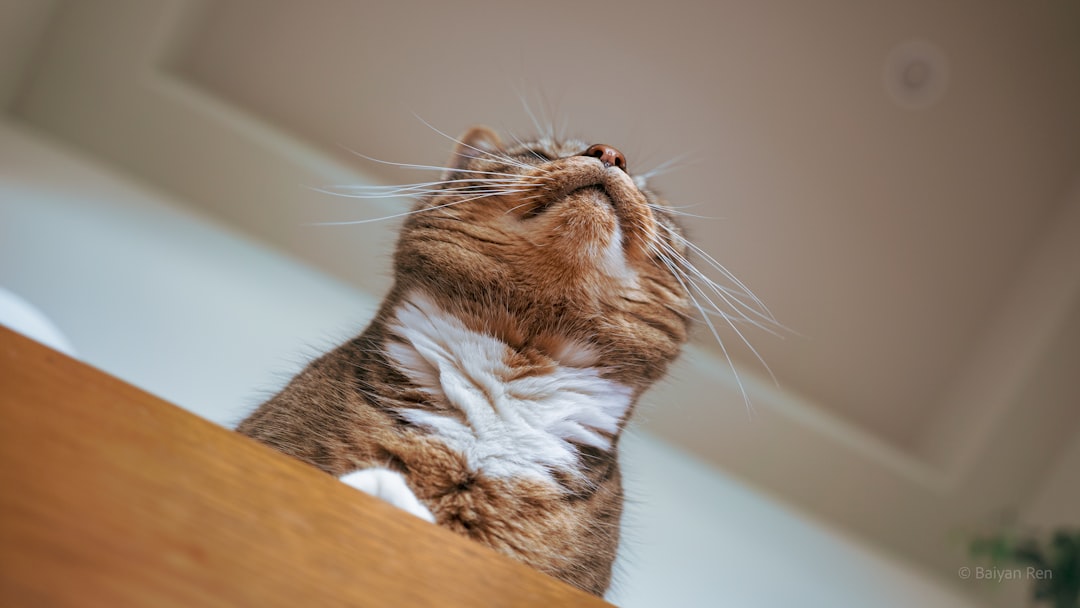
Cats “sniffing” or, more accurately, “analyzing” the wind or air, creates a truly fascinating and somewhat mystical image from an outsider’s perspective. However, this action is an entirely biological and survival-oriented process, stemming from cats’ perception of the world in a much different way than us.
The Basic Mechanisms Behind This Behavior
-
The Jacobson’s Organ (Vomeronasal Organ) and the “Flehmen Response”
When cats sniff the air, they slightly open their mouths and curl their upper lips upwards (this is called the Flehmen response). They are not actually directing the scent directly to their brains, but rather to the Jacobson’s organ (vomeronasal organ) located just behind the palate.
- What are they doing? This organ is specialized not for ordinary odors, but for analyzing much deeper data called “pheromones” (chemical signals), which provide information such as the sex, stress level, or territorial marking of other animals.
- Why the wind? The wind carries chemical particles in the environment towards the cat. By “sniffing” the wind, the cat essentially scans a vast dataset about what is happening in its surroundings at that moment.
-
Creating an Invisible Map
Cats have many more olfactory receptors in their nasal mucosa than humans do. When they analyze the particles carried by the wind, they can learn:
- Is there another cat nearby?
- Which direction did that cat go?
- Is a dangerous predator or prey animal in the direction the wind is coming from?
- What is the condition of a nearby plant or other object?
So, when a cat sniffs the wind, it doesn’t just “smell“; it reads the wind’s direction, intensity, and the chemical map within it at that moment, thereby creating a spatial analysis of its environment.
-
An Evolutionary Legacy
This behavior is a vital “radar” system inherited from cats’ wild ancestors. As a predator, a cat might wait a long time until it sees its prey using its eyes, but through its nose and the wind, it can “see” much more distant threats or opportunities. As the wind’s direction changes, the cat updates the data it receives.
In short, when a cat sniffs the wind, it isn’t just inhaling air; it’s almost like a biological computer, deciphering the “secret messages” brought by the wind. Their seemingly dull gaze and stillness at that moment stem from this complex data processing occurring in their brains.
What About Other Animals?
This ability is also found in many other animals, but each species uses it differently according to its lifestyle and survival needs. The Jacobson’s organ (vomeronasal organ) plays a critical role, especially in instinctive and social communication.
Here are some other animals that possess this ability to “analyze the wind” or read pheromones:
-
Horses (Most Distinct Flehmen Response)
Horses are among the animals that exhibit this behavior (the Flehmen response) most distinctly. When a horse detects the scent of a mare, in particular, or encounters an unusual odor, it curls its upper lip, shows its teeth, and inhales deeply. While this sight might seem comical, horses attempt to understand the chemical signals in their environment by “tasting” them this way.
-
Predators (Tigers, Lions, and Leopards)
Just like domestic cats, big cats actively use their vomeronasal organs. In the wild, a lion or tiger can smell the wind to detect the presence of a herd miles away or ascertain if another territorial owner has passed through. This is a vital “early warning” system for determining their hunting strategies.
-
Deer and Antelopes
Deer and antelopes, living in herds, are highly dependent on pheromone signals. They constantly scan the air both to sense predators and to track social hierarchy and mating seasons within the herd. Standing against the wind is a defensive tactic they have developed to detect the scent of an enemy early.
-
Dogs (A Different Method)
Dogs also have vomeronasal organs, but dogs “smell” the world differently from us. Unlike cats, the nasal anatomy of dogs is designed to continuously direct inhaled air to their olfactory receptors. They don’t always adopt a special facial expression to “read” the wind; their noses are constantly working. However, when dogs smell the trail or urine of another dog, they do make a special nose movement to send this information to their Jacobson’s organs.
-
Reptiles (Snakes and Lizards)
Snakes’ “forked tongues” are actually tools for smelling the air. They flick their tongues out to “taste” the air, then touch their tongues to the vomeronasal organ (Jacobson’s organ) inside their mouths. So, for snakes, smelling the wind means physically collecting the chemical map of the environment via their tongues and transporting it to their brains.
Leave a Reply