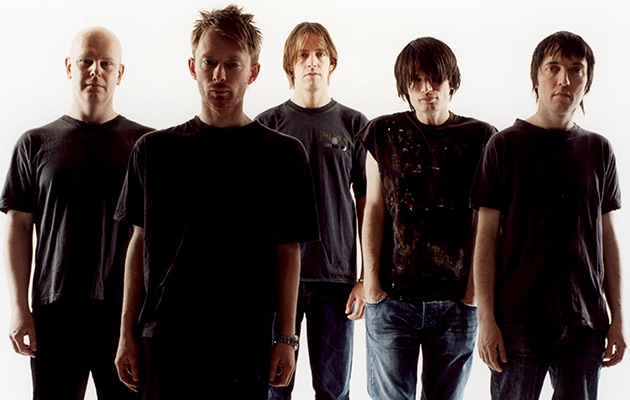
There is an extremely strong and documented musical bond between Radiohead and Aphex Twin (Richard D. James), involving both musical aspects and direct interaction. This bond began with one-sided admiration and, over time, transformed into a catalyst that completely changed Radiohead‘s musical vision.
So, how exactly did the anatomy of this relationship between a band at the peak of rock music and the prodigy of electronic music take shape?
Radiohead’s “Kid A” Transformation and Aphex Twin’s Influence
Thom Yorke and the Creative Crisis
In 1997, Radiohead, having reached the pinnacle of rock music with their legendary OK Computer album, experienced a serious creative block after this colossal success, moving away from traditional guitar-based music and their rock band identity. The band’s vocalist, Thom Yorke, openly stated at the time that he felt rock music was over and had begun to literally hate guitars.
The Salvific Role of IDM and Electronic Music
The fundamental force that pulled Thom Yorke out of this deep creative crisis was IDM (Intelligent Dance Music) and electronic music recordings released under the Warp Records label, especially Aphex Twin and Autechre. Yorke was literally fascinated by Aphex Twin‘s rhythmic structures, amorphous sound designs, and unique melodic genius.
This powerful electronic influence formed the basis of the band’s Kid A (and the immediately following Amnesiac) albums, released in 2000, which are considered one of the most radical shifts in modern music history. The album’s complex drum programming, abstract synth layers, and unconventional song structures were directly inspired by the Aphex Twin school. The album’s cult track, “Idioteque“, is the most concrete and perfect musical product of this IDM admiration.
Richard D. James’s (Aphex Twin) Distant and Ironic Attitude
Although Radiohead expressed their deep admiration for Aphex Twin and how much they were inspired by him at every opportunity, Richard D. James initially approached this situation with a rather distant and characteristically ironic arrogance.
The Rejected Legendary Tour Offer
At the peak of their musical evolution, Radiohead made an official offer to Aphex Twin, their biggest idol, to join them on a world tour. However, Richard D. James rejected this historic offer, stating that he did not like playing in stadiums or massive arenas and did not want to perform as an opening act (sub-group) for a popular rock band, no matter how big.
Aphex Twin’s Comments on Radiohead
James was quite outspoken when talking about Radiohead in interviews. While stating that he didn’t find their music bad, he described it as “too mainstream and familiar” for him. In a notable interview, he made comments along these lines:
“When I listen to them, I can clearly see that they were influenced by me, but that doesn’t excite me. I already know the structures that pop music goes to.”
Nevertheless, in later years, James adopted a more moderate and respectful stance towards Thom Yorke‘s solo works and production quality.
Common Bonds: Warp Records and Jonny Greenwood
Although there was no direct studio collaboration between the two, their musical visions and paths intersected in various projects:
- Warp Records Night (2003): At the legendary Warp Works & Twentieth Century Masters concerts held at London’s prestigious Royal Festival Hall, both Aphex Twin‘s electronic works and some of Radiohead‘s pieces were reinterpreted in classical music form by the London Sinfonietta, bringing them together on the same stage.
- Jonny Greenwood Connection: Radiohead‘s brilliant multi-instrumentalist Jonny Greenwood has a deep connection with contemporary classical music and avant-garde electronic music. It is well-known that Greenwood closely followed Aphex Twin‘s microtonal approaches and digital sound manipulation techniques in his solo compositions and film score (soundtrack) production processes.
In Summary: Would there be a New Radiohead Without Aphex Twin?
This iconic bond between Radiohead and Aphex Twin is one of admiration, inspiration, and bold musical evolution on one side (Radiohead), and distant appreciation and remote approval of this influence on the other (Aphex Twin).
As music authorities also agree: If Aphex Twin and the IDM movement he pioneered had not existed, the experimental Radiohead (Kid A era and beyond) that we know today, which courageously brought electronic music into the mainstream, would probably never have existed.