From a firm handshake to a deep bow, a friendly nod to a triple cheek kiss, greetings are a universal human practice, yet their forms are incredibly diverse. Far more than just a polite acknowledgment, how we greet someone is a snapshot of history, social hierarchy, and cultural values.
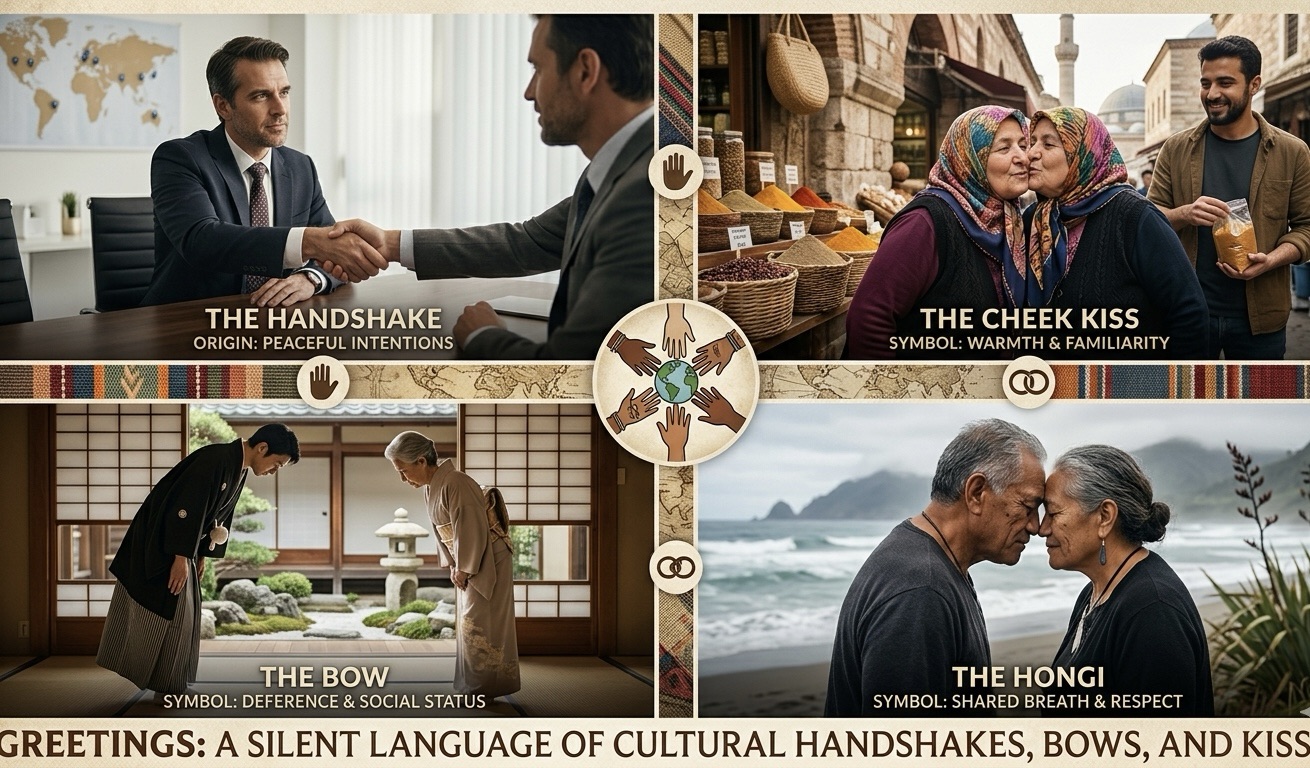
Handshakes, for instance, are thought to have originated as a gesture to show you were unarmed and had peaceful intentions, evolving into a sign of trust and respect in Western cultures. A deep bow in Japan, however, signifies deference and respect, with the depth and duration often indicating the social status difference between individuals. In many Middle Eastern and Mediterranean cultures, kissing on the cheek (or cheeks) conveys warmth and familiarity, while in others, such as some indigenous communities, a simple nod or even prolonged eye contact can be the most profound form of acknowledgment.
These varied rituals serve common purposes: establishing social bonds, signaling respect or familiarity, and setting the tone for interaction. Each unique greeting is a silent language, a cultural handshake (or bow, or kiss) that tells us where we stand in the intricate dance of human connection.
Leave a Reply