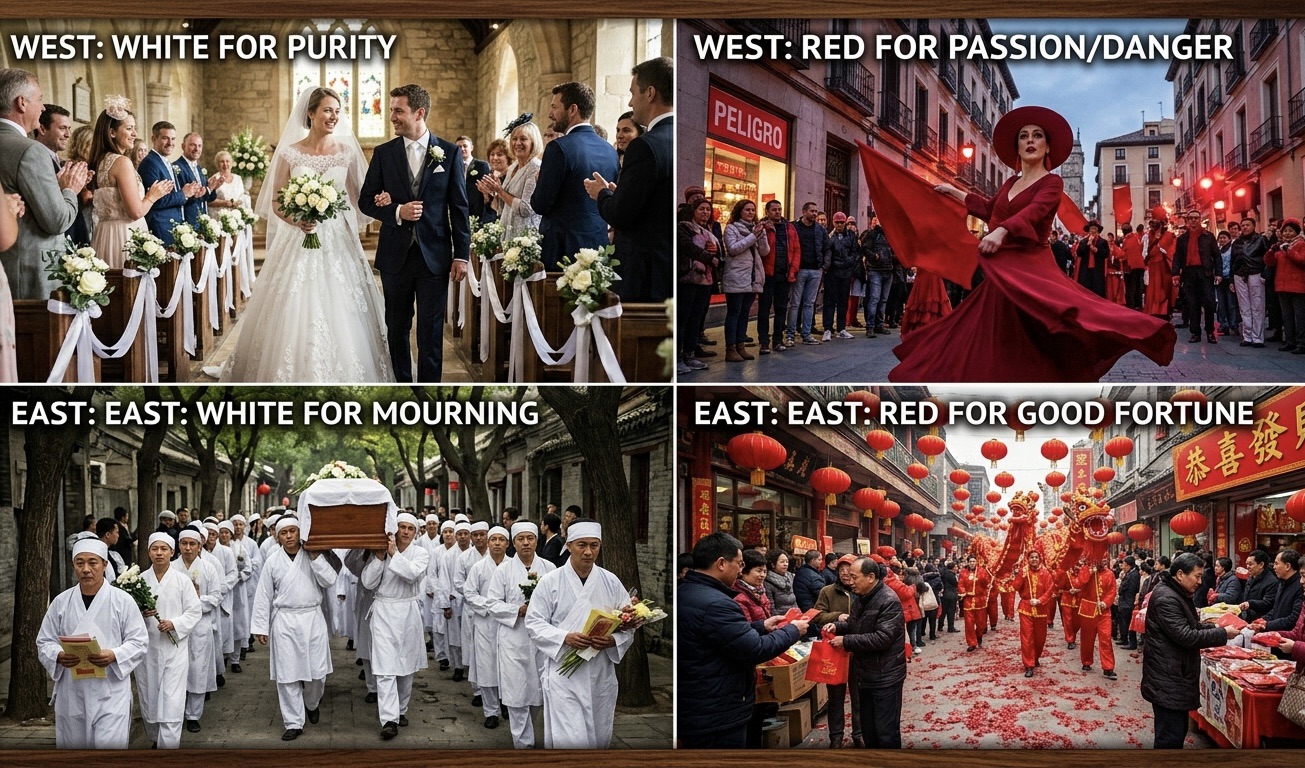
Colors are more than just visual sensations; they are powerful cultural symbols, silently communicating ideas, emotions, and traditions. What signifies one thing in a particular society can mean its exact opposite elsewhere. For instance, while white is universally associated with purity, weddings, and peace in many Western cultures, it often symbolizes mourning, death, and funerals in various Asian countries like China, Korea, and India. Red, often linked to love, passion, and danger in the West, is a color of good luck, prosperity, and celebration in China, frequently seen in weddings and New Year festivities. Green, representing nature, growth, and envy in some contexts, holds deep religious significance in Islamic cultures and is associated with fertility and new beginnings in others. Understanding this vibrant ‘color code’ reveals the rich tapestry of human diversity and how deeply culture shapes our perception of the world.
The Silent Language of Colors: Why Shades Mean Different Things Around the World